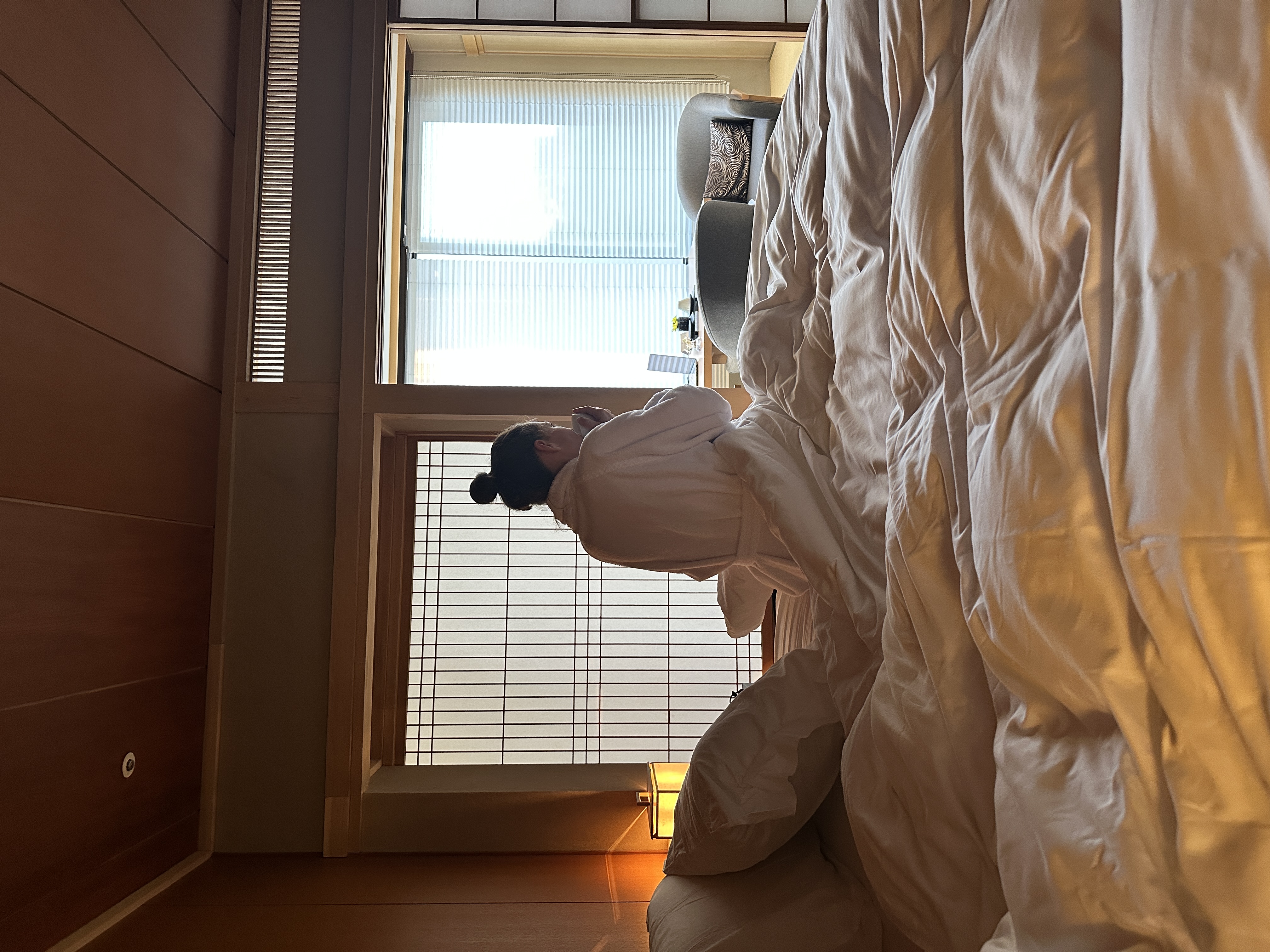
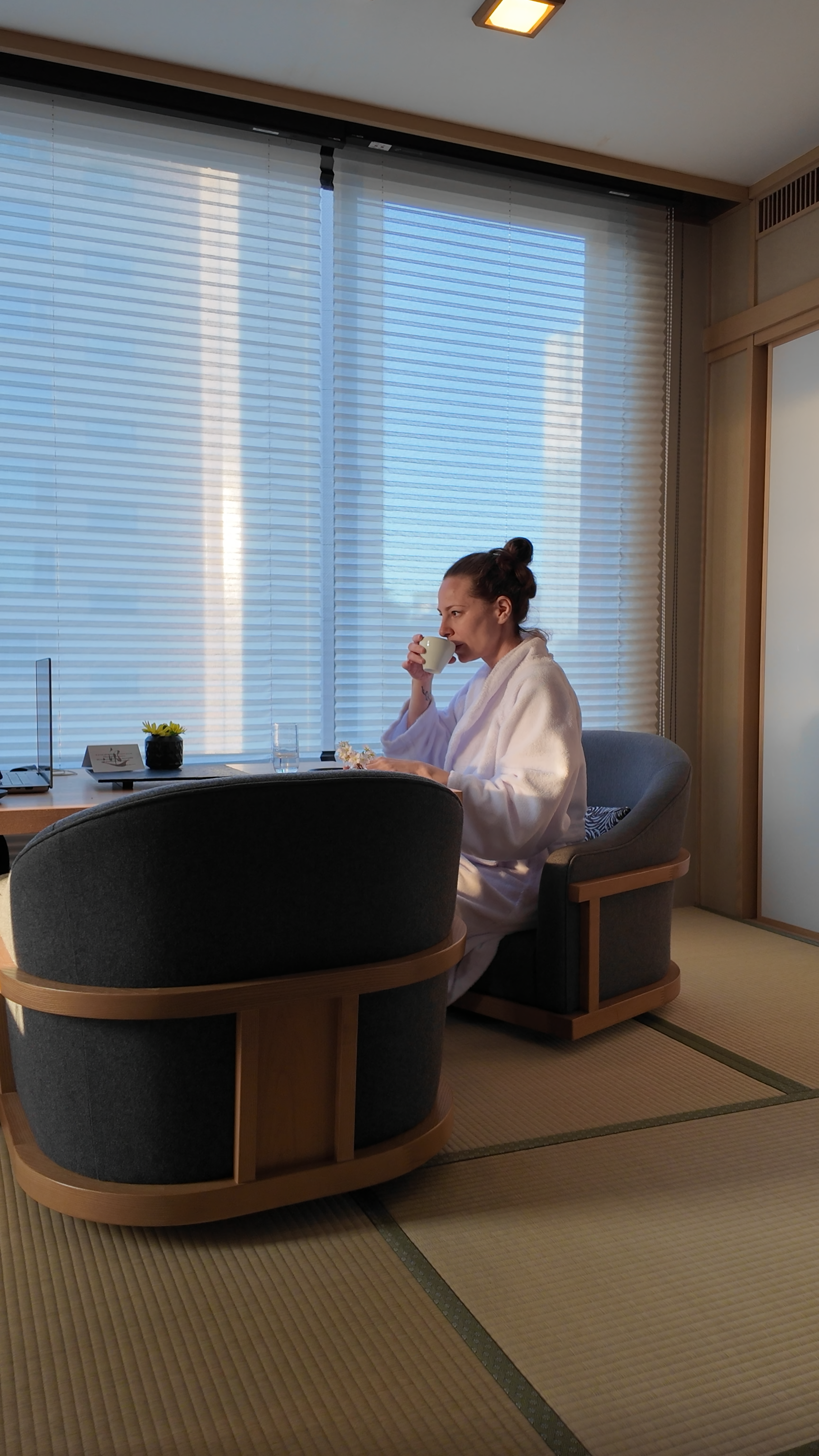
A quiet last morning in our tatami-style suite.
Tokyo · Japan
Takanawa Hanakohro: If I Had One More Night in Japan, I’d Spend It Here
They gave us a piece of Japan to take home.
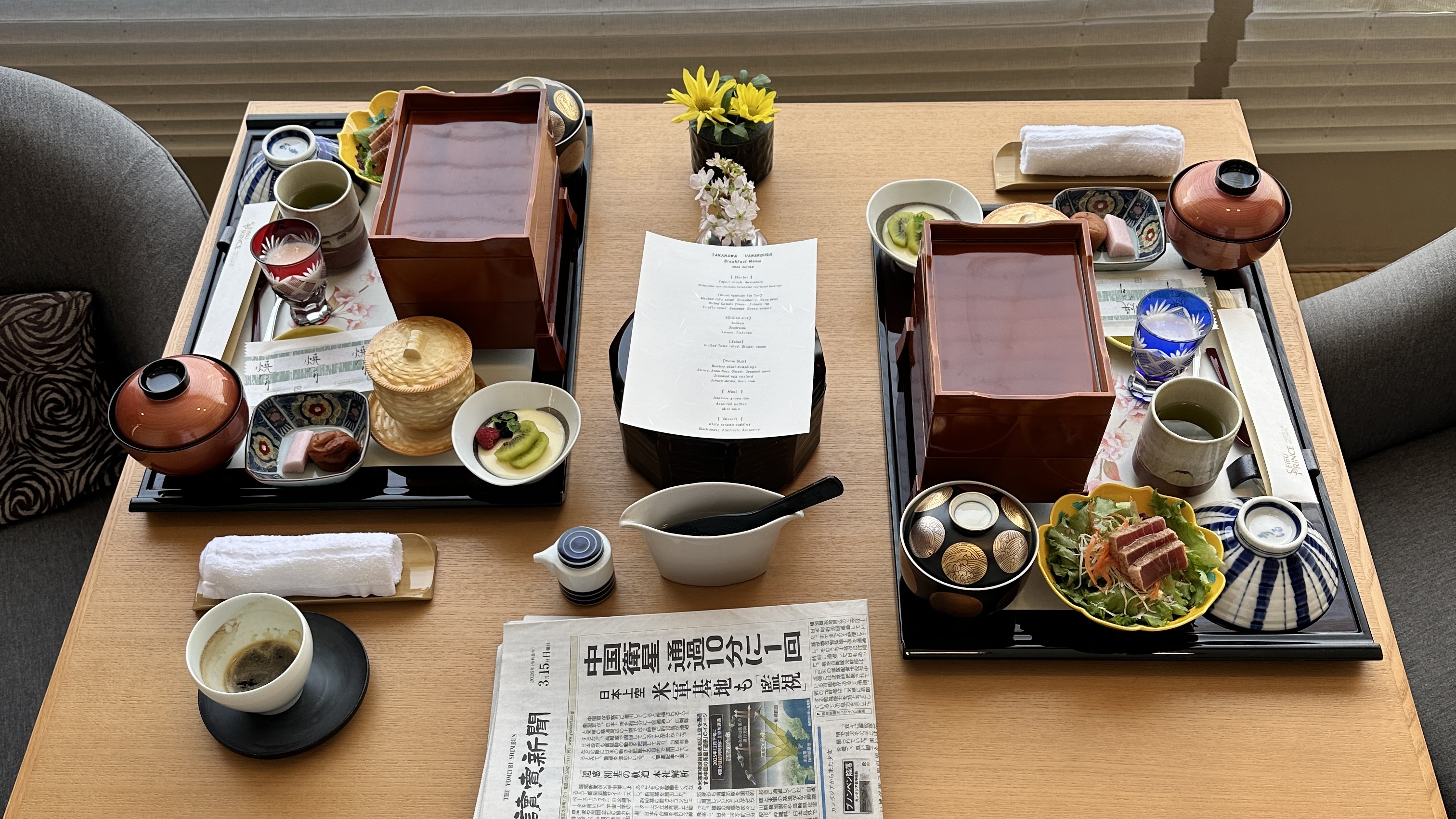
Breakfast arrived in little bowls, covered dishes, and quiet ceremony.
March through November
Best months to visit
March through November
Best months to visit
A 16-suite, ryokan-inspired luxury hotel tucked inside a Japanese garden, with tatami rooms and a rare sense of stillness in Tokyo. For travelers who want to savor Japan rather than rush through it.
The Last Morning
I thought Takanawa Hanakohro would be a beautiful, calm place to spend our last night in Tokyo. That part, I was right about.
What I did not expect was that it would make Japan harder to leave.
The hotel sits in Takanawa, a more relaxed, well-to-do part of Tokyo that feels worlds away from the version of the city most visitors build their trips around. Not Shinjuku. Not Ginza. Not neon, crowds, shopping bags, and hotel lobbies that feel like international meeting points.
This was quieter than that.
There I was, in my robe, sipping coffee, and doing my best to accept that trips do, in fact, end.
At 7 a.m., there was a gentle knock at the door for our scheduled in-room breakfast.
I opened it to find two women dressed in kimono with what looked like an entire Japanese feast. They moved through the room softly and deliberately, setting down each dish, cup, tray, and lacquered box with care. It felt less like room service and more like a ceremony.
For a moment, leaving felt very far away. But I knew it wasn’t.
So I let myself slow all the way down to savor it. The spread featured green tea, rice, miso soup, fish, pickled vegetables, tiny dishes, tiny cups, and a little chest with drawers.
A breakfast with drawers? Ok. You have my attention.
I wanted to notice everything: the food, the room, the garden outside the window, and the few hours we had left. And then, right before we got into the taxi, the team handed me something at checkout that made leaving feel even harder.
But I’ll get to that. First, we need to talk about the stairs.
When the Wrong Way Becomes the Right Entrance
We took the Shinkansen from Osaka and got off at Shinagawa Station, which, on a map, looks like a hop, skip, and a jump away from the hotel.
The official access notes say Takanawa Hanakohro is about five minutes uphill from Shinagawa Station’s Takanawa Exit, which sounds completely reasonable in theory.
So of course Israel said, “Oh perfect, let’s walk.” I was not exactly a fan of this plan, but I figured, how bad could it be? What the map did not mention was that we would somehow arrive from the back.
And that meant stairs. A lot of stairs.
So, naturally, we climbed them heroically. By the time we reached the top, we felt like we had climbed a mountain and were very proud of ourselves.
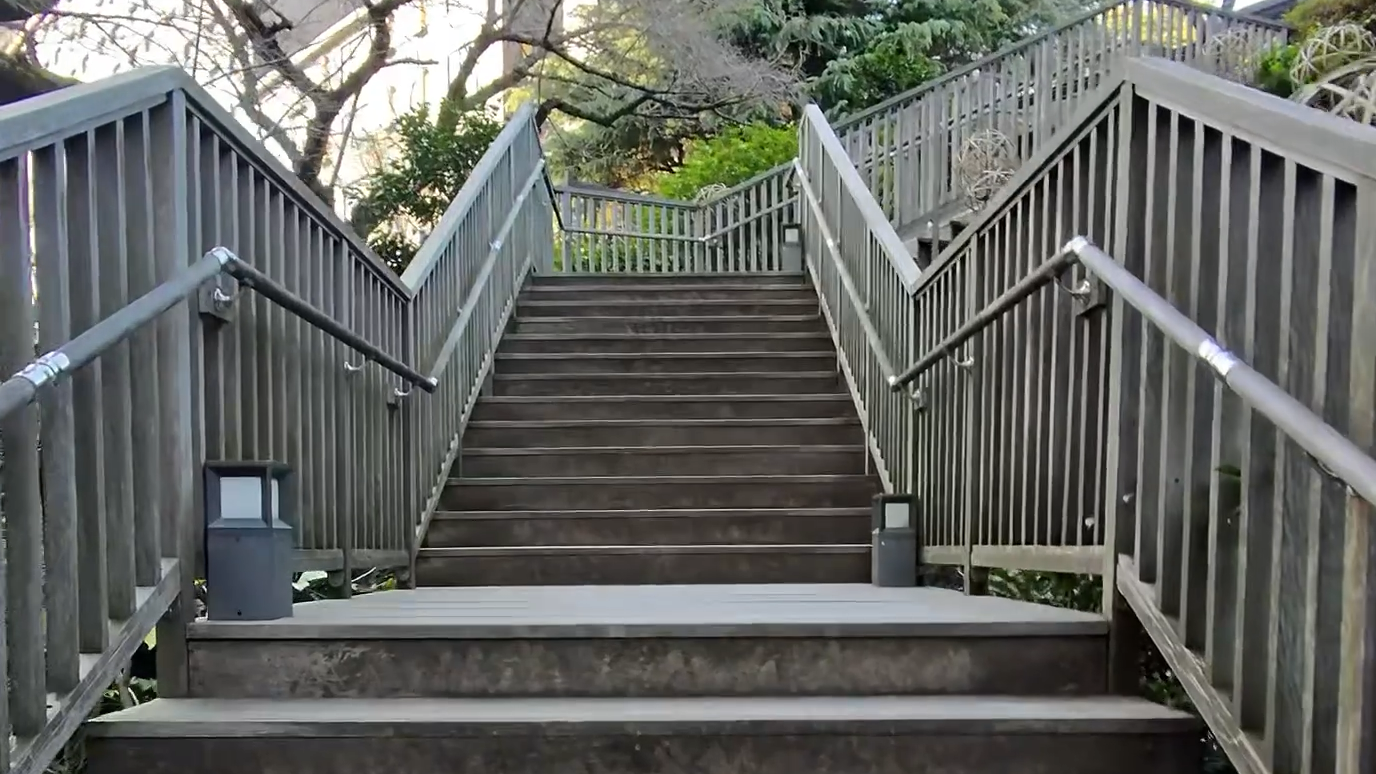
Then we looked around. It was beautiful! Had we just landed in the garden?
It seemed that, yes. Somehow, we had stumbled directly into the Takanawa Japanese Garden.
The only problem was that it still was not totally clear where the hotel was. There were several buildings around us, and I had expected Takanawa Hanakohro to announce itself as its own standalone place. It did not.
So we wandered, checked the map, recalculated our dignity, and eventually asked someone.
We were in the right place. We just needed to find the right door.
If we had pulled up neatly to the entrance, we would have missed that first disorienting moment of discovery. Instead, the hotel introduced itself through the garden first: quiet paths, old trees, bridges, and that immediate feeling of being tucked away from the city.
It was not the smoothest arrival but it was the right one for us. And you know what? The walk was actually nice.
A Hotel Within a Hotel
When we finally asked for help, we were guided to a private elevator tucked within the Prince hotel complex.
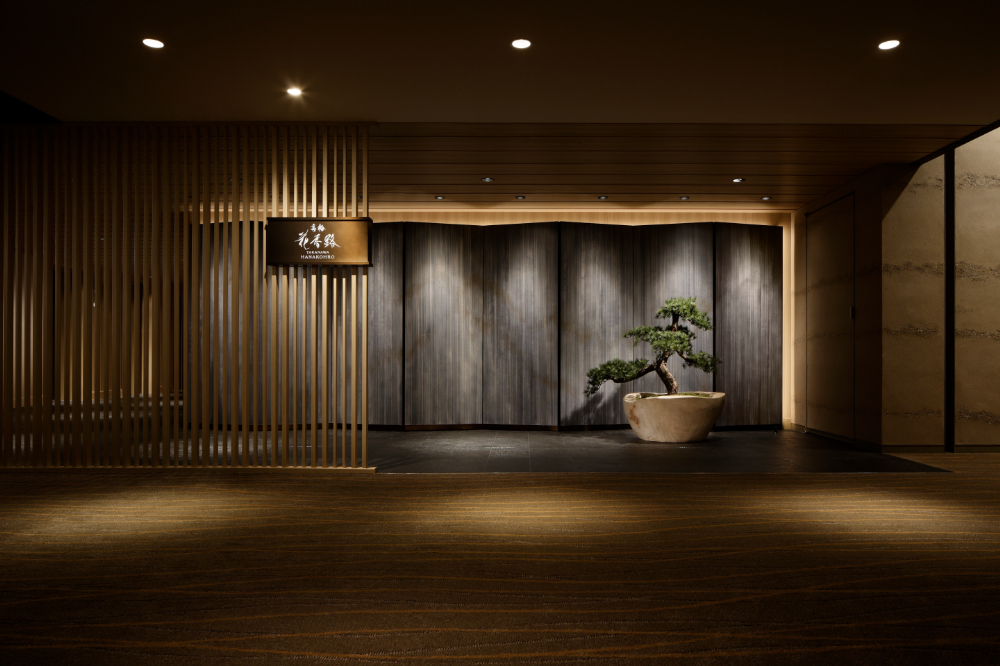
As soon as the doors opened on the fourth floor, everything changed.
It felt like we had crossed into a smaller, quieter world hidden inside the larger one. The energy shifted from modern and busy to timeless and calm. There was no rush. No lobby bustle. No feeling that people were passing through on their way somewhere else.
Takanawa Hanakohro has only 16 suites. No standard rooms. All suites.
We were escorted into OH-SAI Lounge for check-in, took off our shoes at the entrance, and sat down while the team brought us sakura tea and wagashi shaped like cherry blossoms.
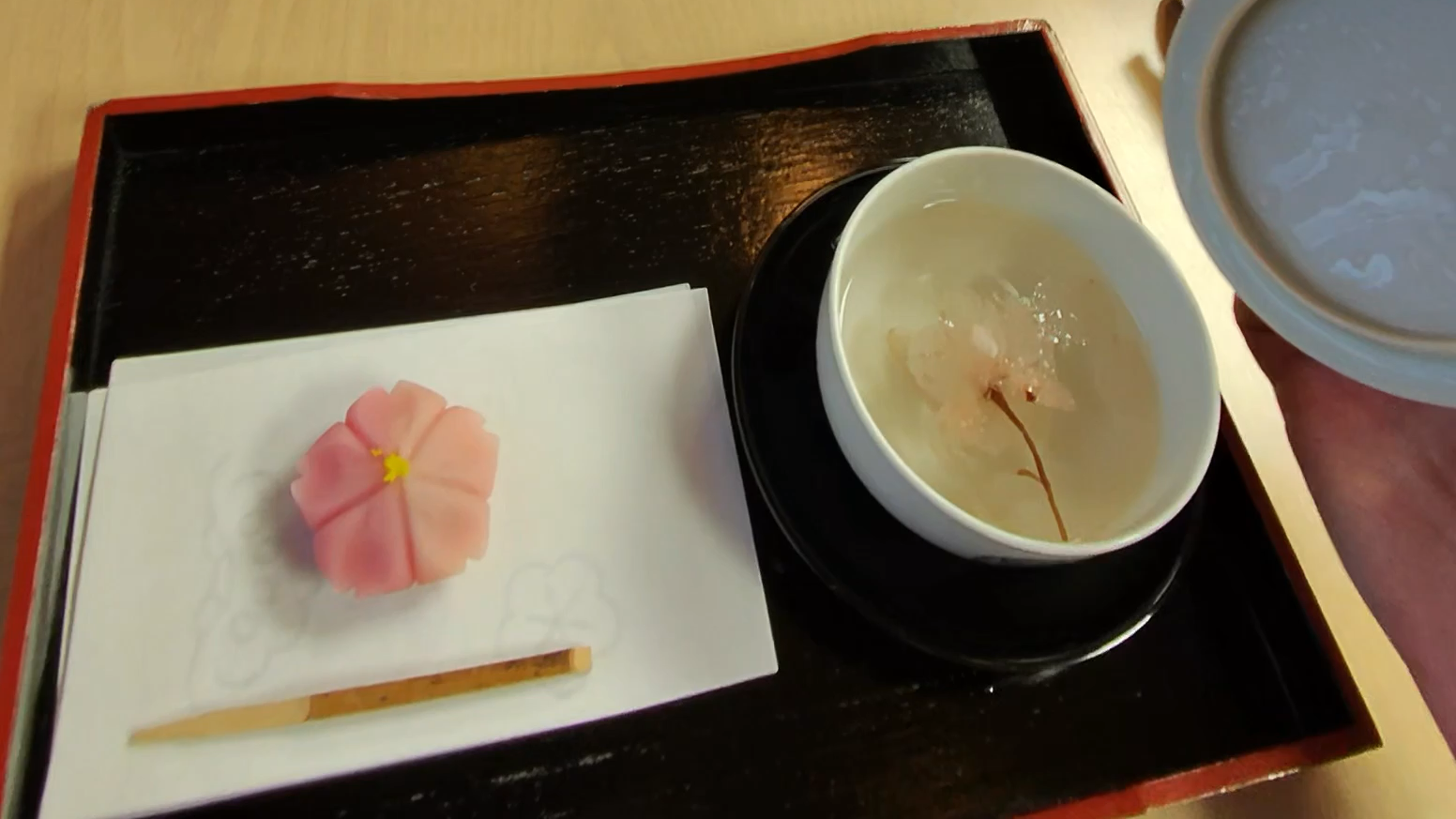
The team explained how the stay worked: the lounge access, the garden, the spa, the cultural activities, the complimentary beverages and light bites at OH-SAI Lounge, and the fact that Hanakohro guests could also access lounges throughout the wider Prince complex.
I remember thinking, Oh, wow. There is so much to do here.
That was exciting.
It was also slightly disappointing, because how exactly were we supposed to experience all of this in less than 24 hours?
And that was the first moment I realized one night was not going to be enough.
Then they gave us the key to our suite.
The Japanese Garden Suite
We headed toward our suite and as we walked, I learned that Hanakohro translates to “floral-scented path,” and each suite is named after a flower. Ours was Yuri, which means lily. That made me smile and reminded me of the Japanese pink lily I painted back in third grade after an inspiring lesson about Georgia O’Keeffe. It is an oddly specific memory to have unlocked by a hotel room name, but there we were.
As we made our way inside, I got happy all over again.
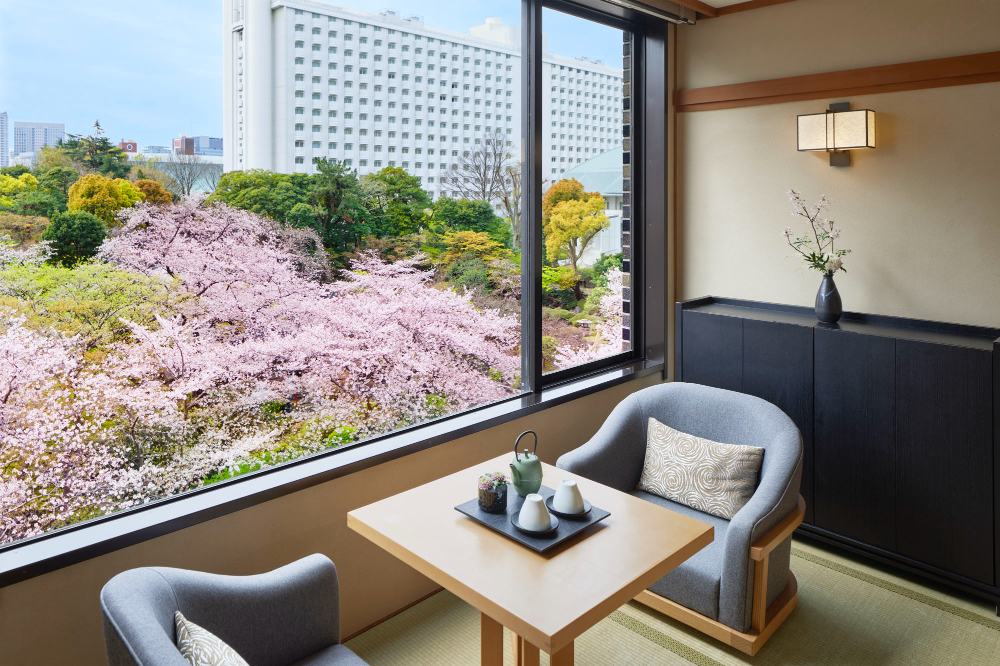
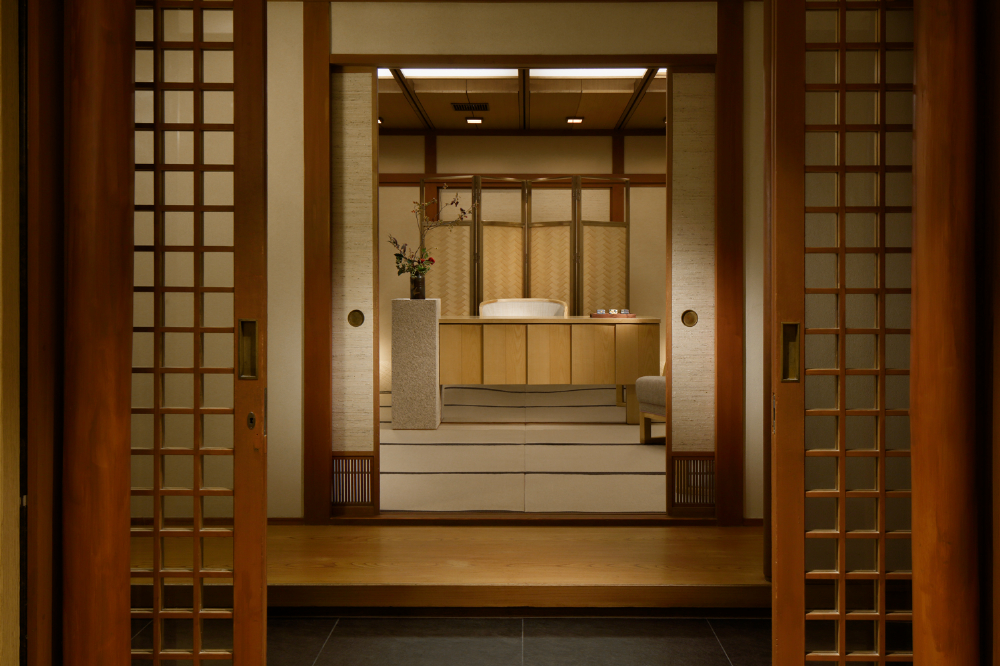
Everything felt natural: wood, tatami floors, washi paper, clay walls, garden views. It had a very elevated traditional ryokan feeling, but with the comfort of a luxury hotel.
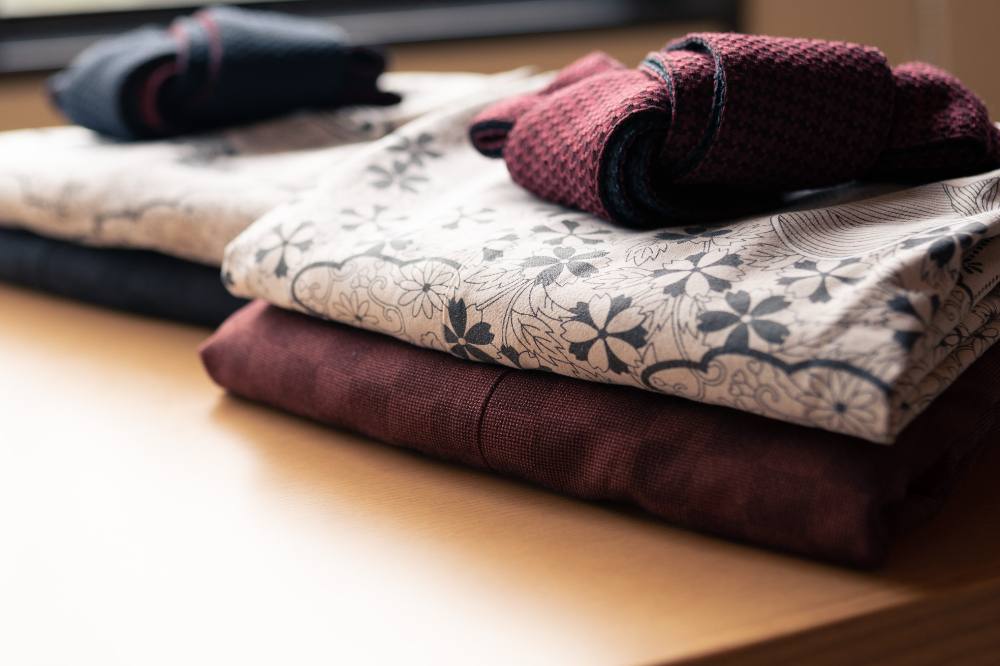
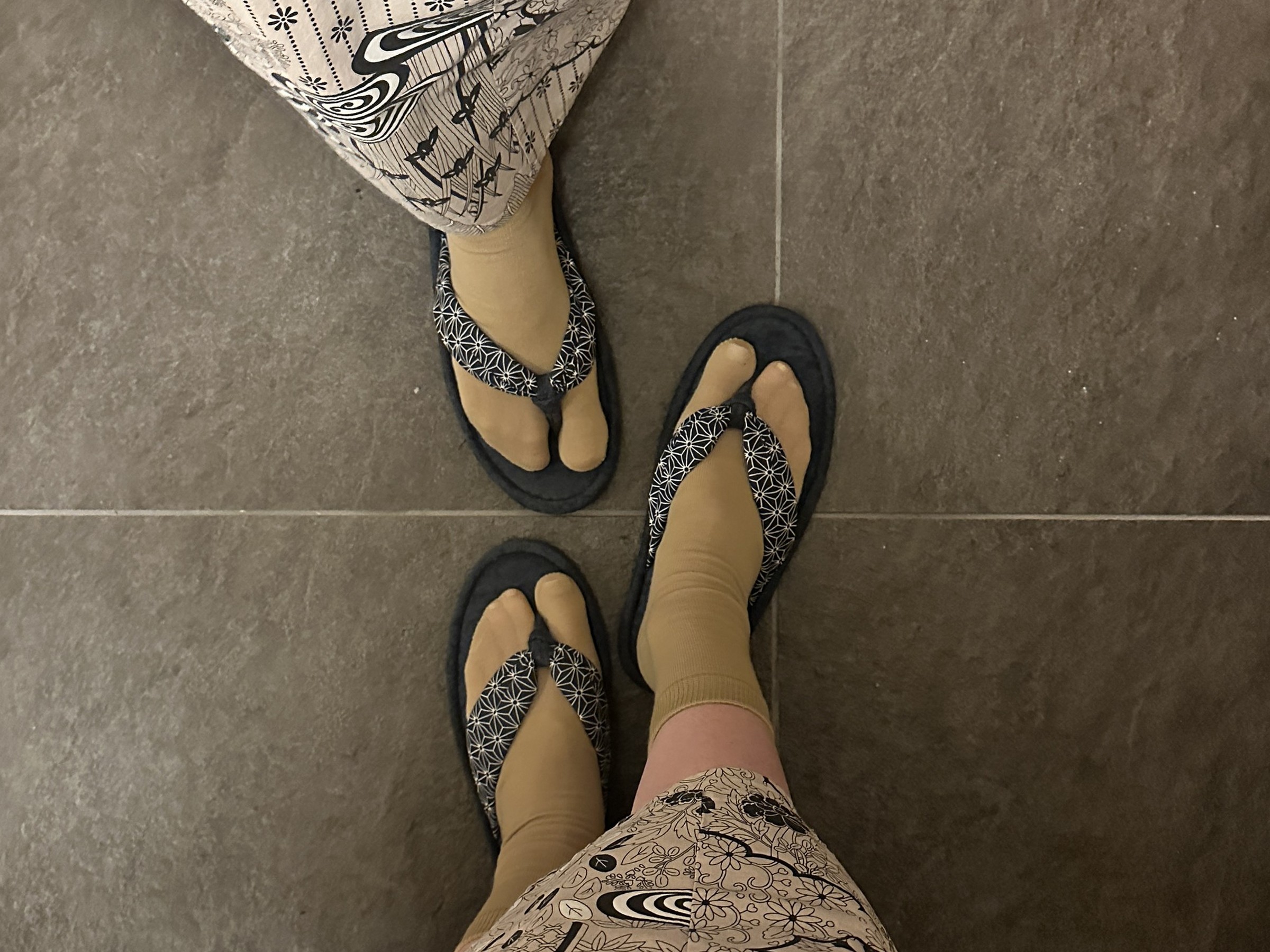
We left our shoes at the lower entry area and noticed the wooden slippers that were for moving around the hotel, the toilet room was just a step up and to the right with its own dedicated slippers, and there were slippers to wear with yukata, but not on tatami. I took those home with me. Best slippers ever! They also give you cute big-toe socks to wear with them.
Near the entrance, there was a large chest where we could open our luggage properly, plus a little cubby area that seemed made for storing. I loved this more than I can explain. Actually, I can explain it. Your suitcase has been through airports, train stations, sidewalks, and who knows what else. I do not want it on the bed or shoved next to clean clothes in a closet. A dedicated luggage area is practical luxury.
The shower and bathtub were separate from the toilet, which I appreciated because one person can enjoy a bath while the other uses the bathroom like a civilized married couple with boundaries.
And then there was the bedroom itself. It was the perfect blend of modern luxury, with that traditional ryokan feeling. The separate dining nook was my favorite. We had views of the garden, a closet to the left, and to the right, a coffee and tea station with a minibar. I loved the chairs! They were low to the ground, but you weren’t sitting on the floor. The beds were low, too, but not on the floor.
I thought it a beautiful compromise. Because listen. I had already experienced on a futon on the floor earlier in Kyoto. And while I am glad I did it, I was also extremely happy to see an elevated bed with fluffy pillows and a proper mattress.
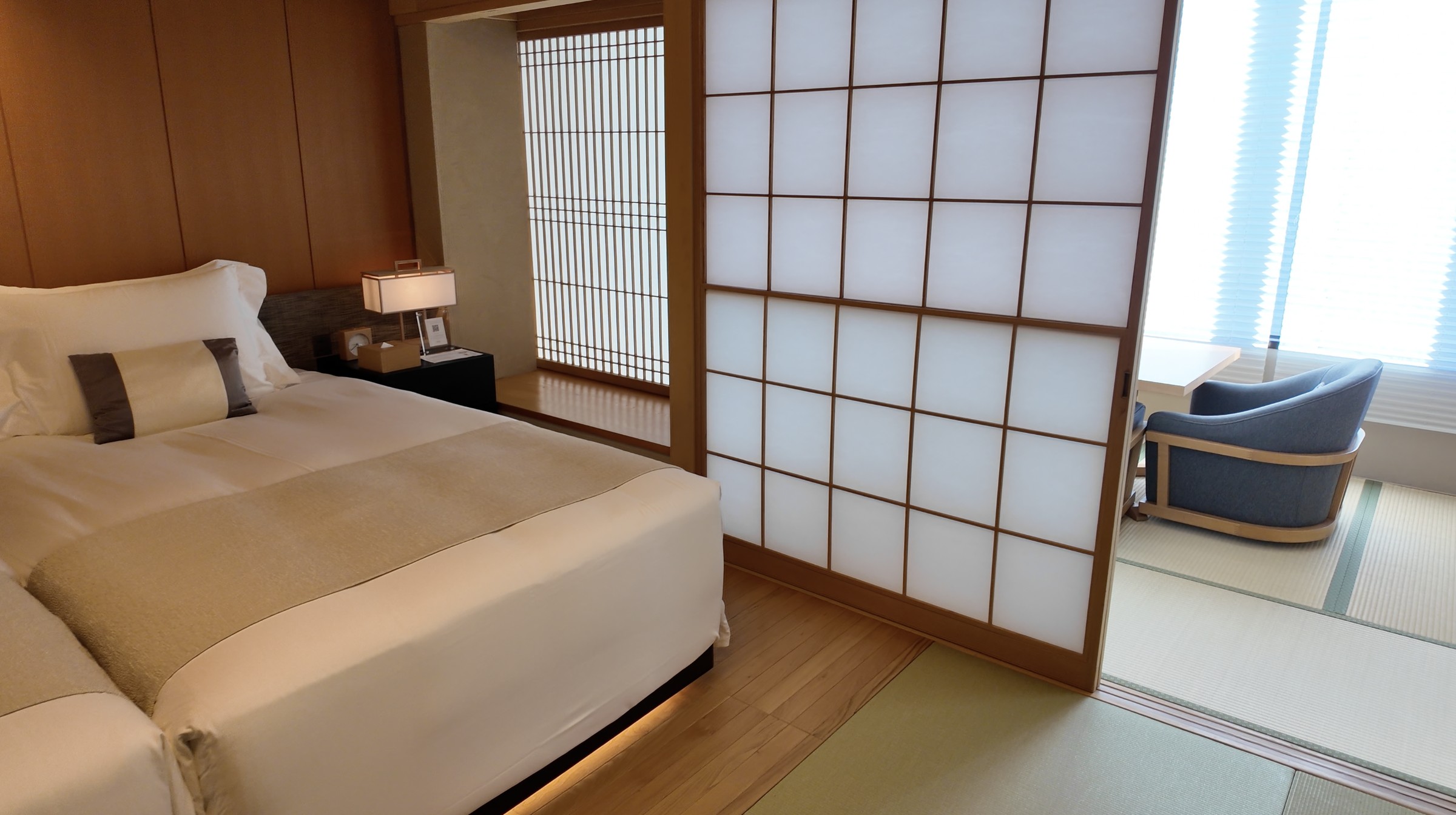
The suite was perfect and I could not wait to get settled.
Room Service, Because Sometimes You Need Pizza and Fried Chicken
We put our things away and immediately realized how hungry we were.
It was about 4 p.m., and we had not eaten since breakfast at Four Seasons Osaka around 7:45 that morning. We also did not have time to grab a bento box for the Shinkansen.
We also did not want to leave the room yet.
So… room service?
Maybe I had indulged in a few too many Famichikis along the way. Maybe I was just tired. Either way, on our last night in Japan, and I wanted comfort food.
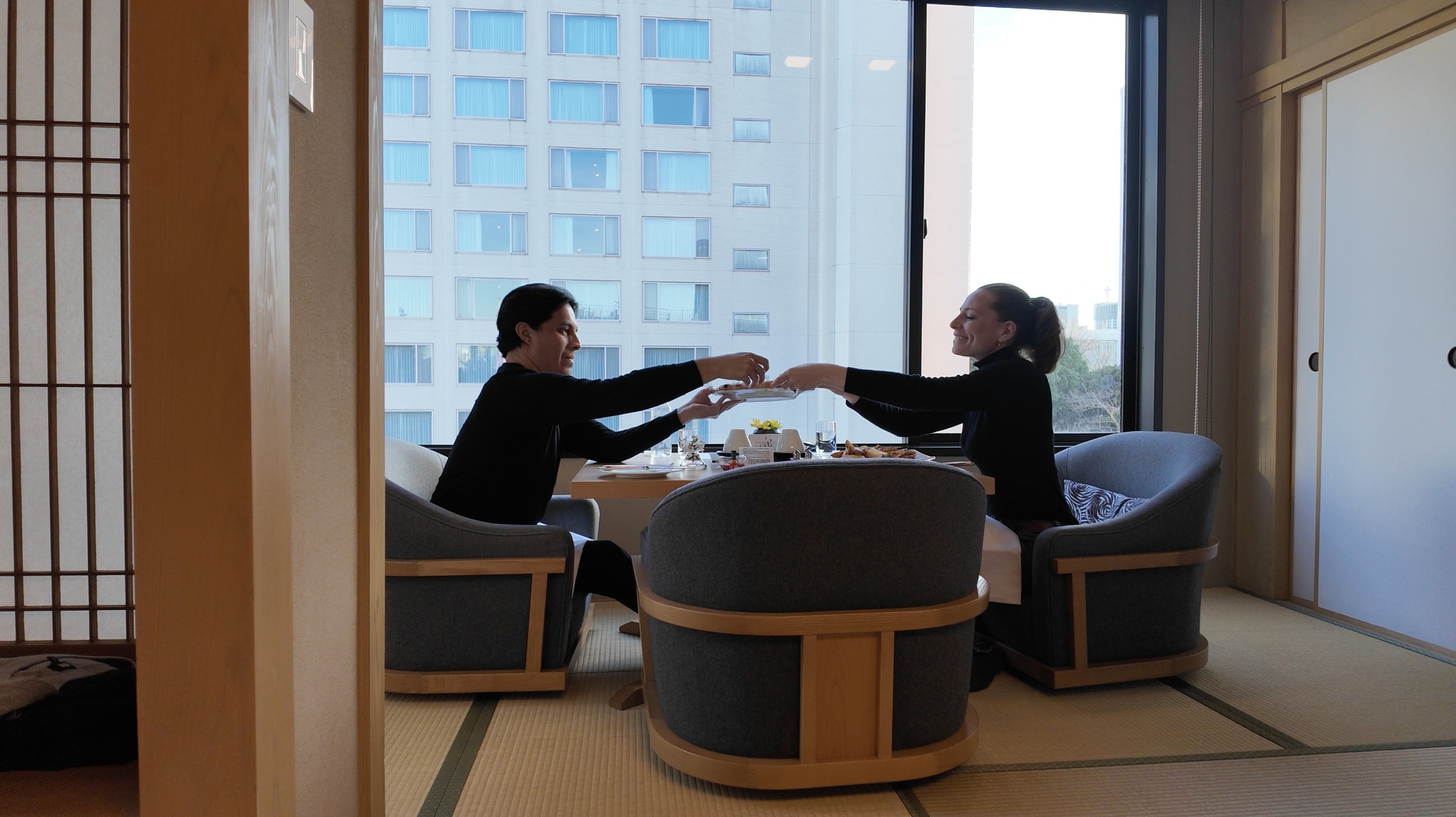
Israel ordered a Margherita pizza. I ordered fried chicken and french fries. We shared everything.
FYI: the pizza, fried chicken, and fries are very good here.
And that is one of the reasons I really enjoyed this stay. I released the self-imposed pressure to perform some perfect version of “how to act in Japan.” After completely immersing myself in the culture, I finally allowed myself to just be without judgement.
Lucky for me, they had western options on the menu. Loved that. Thank you, Takanawa Hanakohro, for indulging us. It was so good.
Sake First, Then the Garden
After savoring every bite of dinner, it was almost time for the sake tasting.
We love sake. So after dinner, we put on our yukata and wooden slippers and headed back to OH-SAI Lounge.
One thing to note: yukata can only be worn on the Takanawa Hanakohro floor, not throughout the entire hotel complex. But I liked that. It added to the feeling that Hanakohro was its own little world.
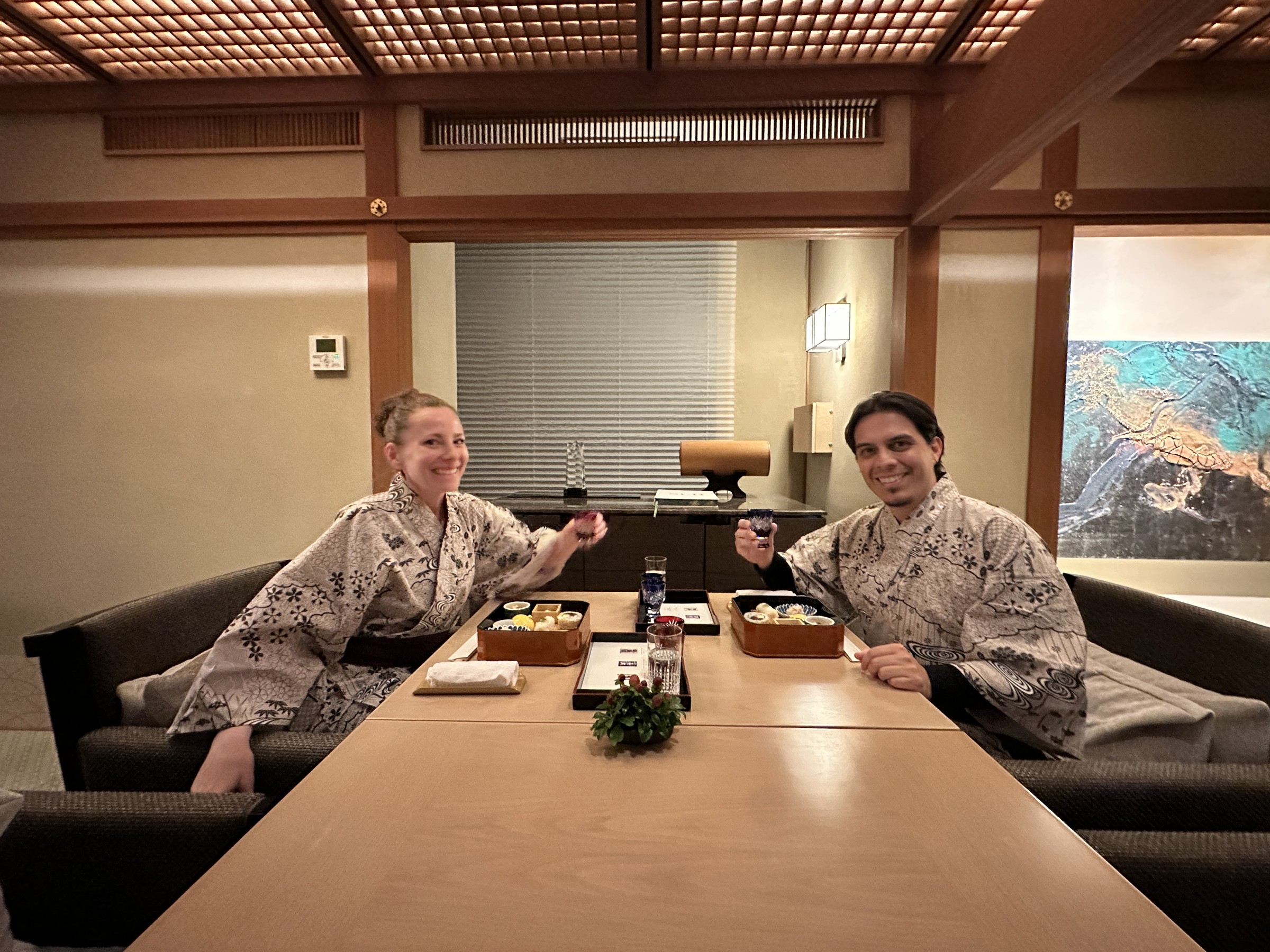
The tasting itself was more than I expected. Maybe because of what we had previously experienced at a traditional ryokan in Gion. They brought out a sake flight with beautiful glasses and light bites in a cute box. It felt exclusive rather than programmed, which is exactly the difference between something feeling special and something feeling like a hotel activity.
The sake was delicious, and once we had sipped it all away, we went back to the suite to change and move on to our next adventure: the garden.
The sun was setting, we had a soft sake buzz, and I think it was the perfect way to experience it.
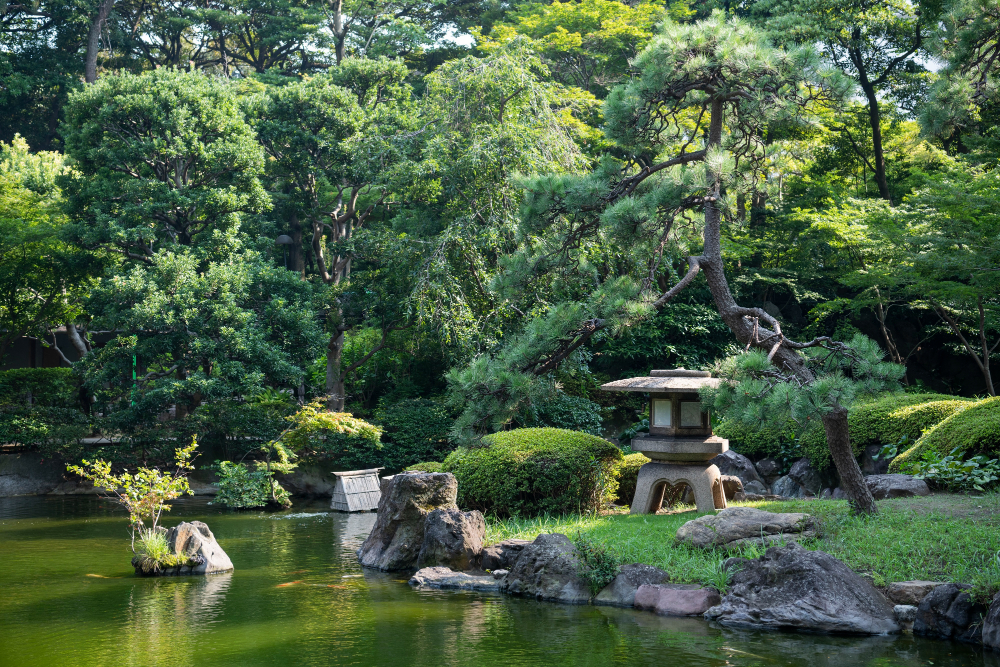
The garden is the center of this property in every sense. Officially, it is roughly 20,000 square meters, with bridges, a koi pond, historic structures, and more than 200 cherry trees. But the facts cannot explain the feeling of it.
We wandered through paths with old wood, moss, stone, and so much green that it was easy to forget we were still in Tokyo. There were plenty of people around, but the garden has so many pathways, and we kept finding quiet little pockets.
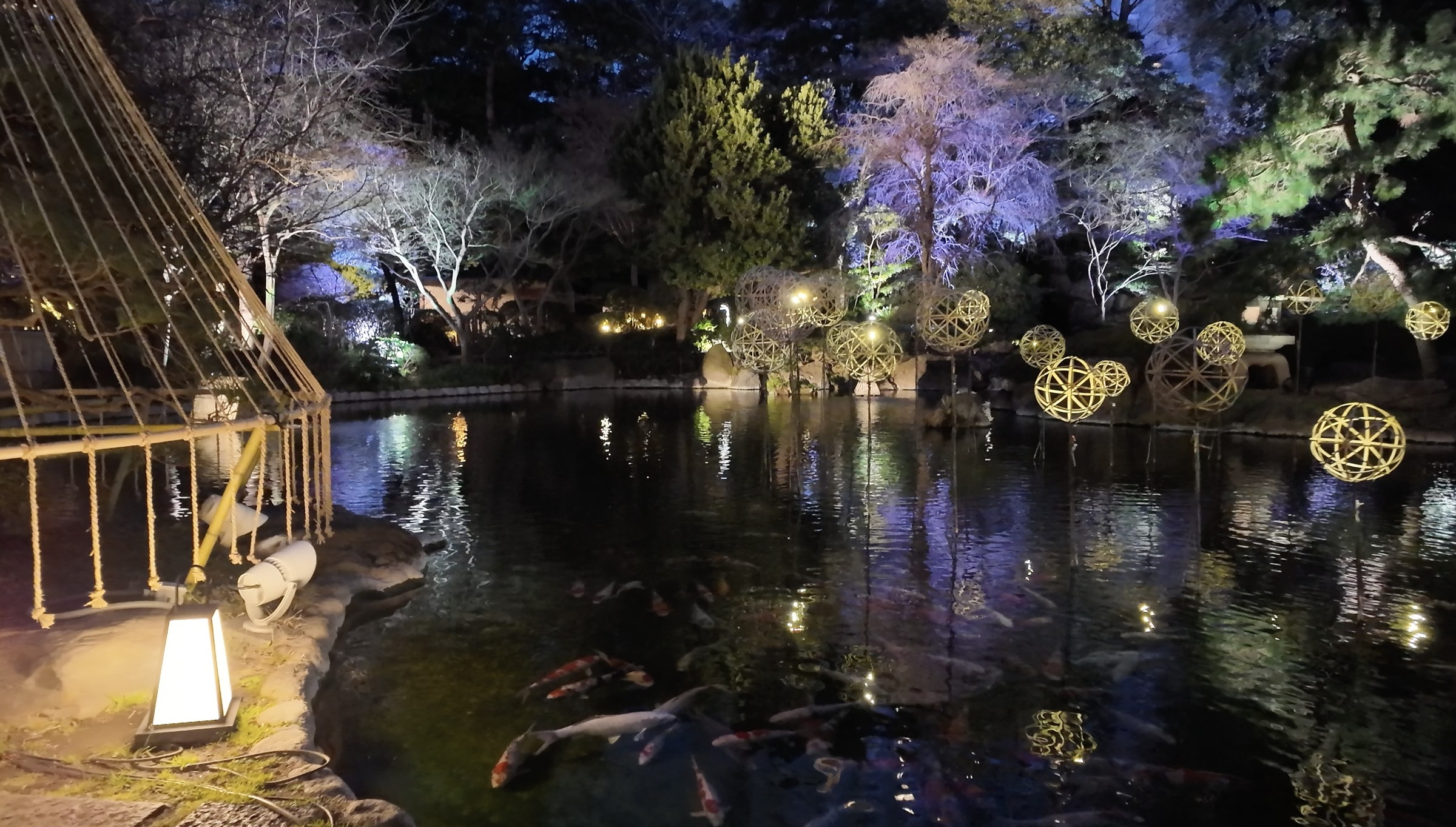
We ended near the koi pond, where colorful fish moved through the water and a light installation with butterflies and music played around us.
The garden is what really made me fall in love with this place. It was unexpected, and by the time we reached the koi pond, we were completely smitten. Maybe the sake helped a little. But this was where everything started coming together for me.
The garden made the whole place feel less like a hotel and more like a small world we had wandered into.
The Wider Complex, the Lounges, and Yes, the 7-Eleven
Back inside the wider Prince complex, curiosity took over.
We decided to investigate one of the more intriguing promises of the stay: lounge hopping.
Takanawa Hanakohro guests have access to OH-SAI Lounge, which is exclusive to Hanakohro, but they also get access to lounges across the Prince hotels in the complex. This was “lounge hopping,” and I wanted to know what that actually looked like in practice.
The answer was: more than we had time for.
That feeling started to settle in as we wandered around. One night was enough to understand the hotel. It was not enough to enjoy everything it offers.
We casually walked into one of the downstairs lounges. There was a full buffet-style spread of food and drinks, with people in conversation all around. It was lively and fun. The hotel complex had its own little ecosystem happening underneath the quieter Hanakohro world upstairs.
We left that lounge looking for the next one, and then I could not believe my eyes.
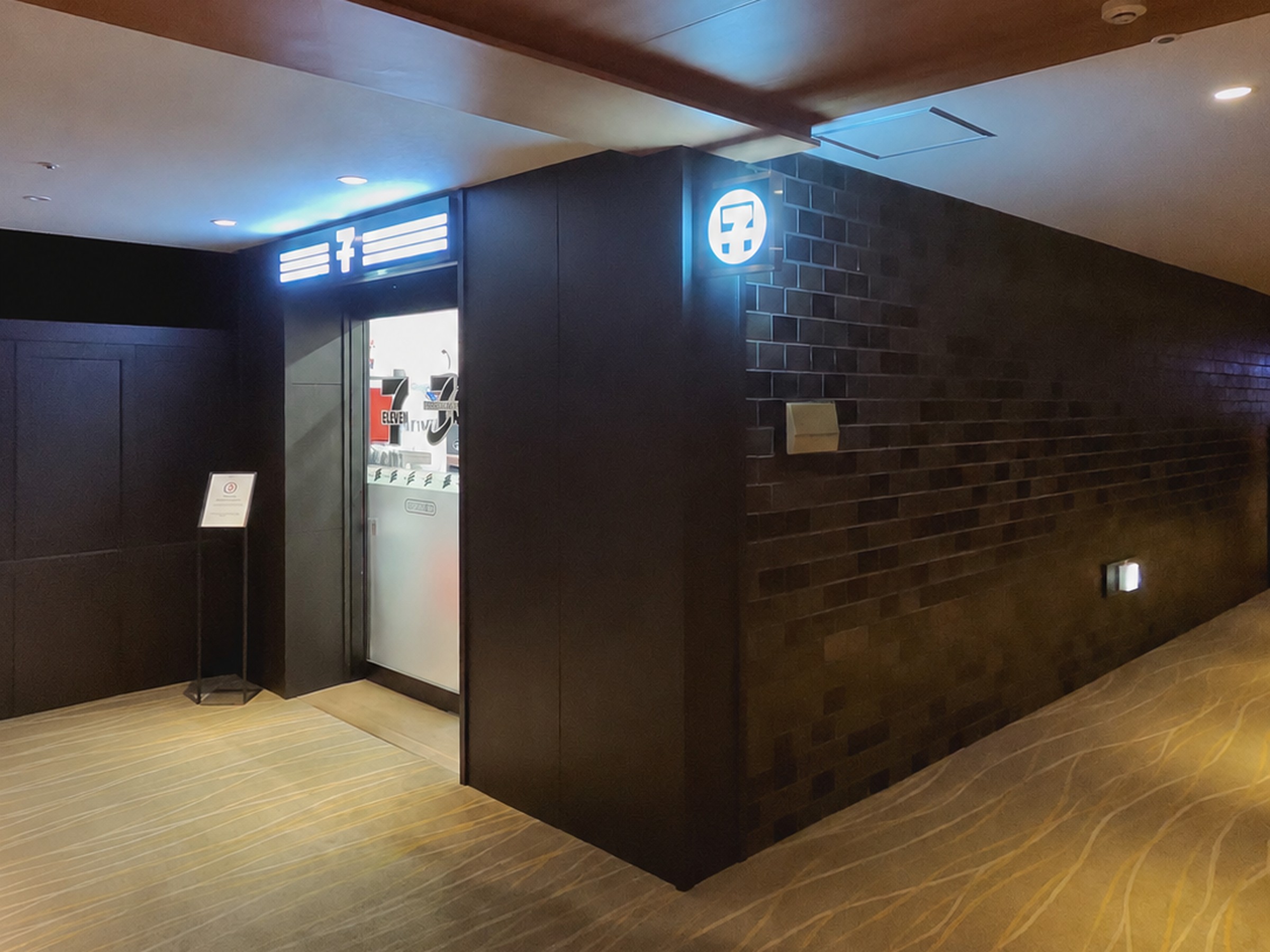
“Is that a 7-Eleven?” It was the coolest thing.
I mean, if I saw a 7-Eleven inside a hotel back home, I probably would not have thought so. But by this point, I had been fully converted to the Japanese version, so I was ecstatic. So much so that I had to snap a shot.
A Forbes Five-Star hotel, a 20,000-square-meter Japanese garden, tatami suites, sake tasting, and then downstairs in the wider complex, a 7-Eleven where you can get vitamins, an egg salad sandwich, a face mask, a late-night snack, or whatever small practical thing suddenly feels essential.
Japan understands convenience differently.
It is not always separate from beauty. Sometimes it sits right underneath it.
After calming down, we continued exploring and stumbled upon a hidden whiskey bar that we initially thought was a spa. Moody, dark, and very unique.
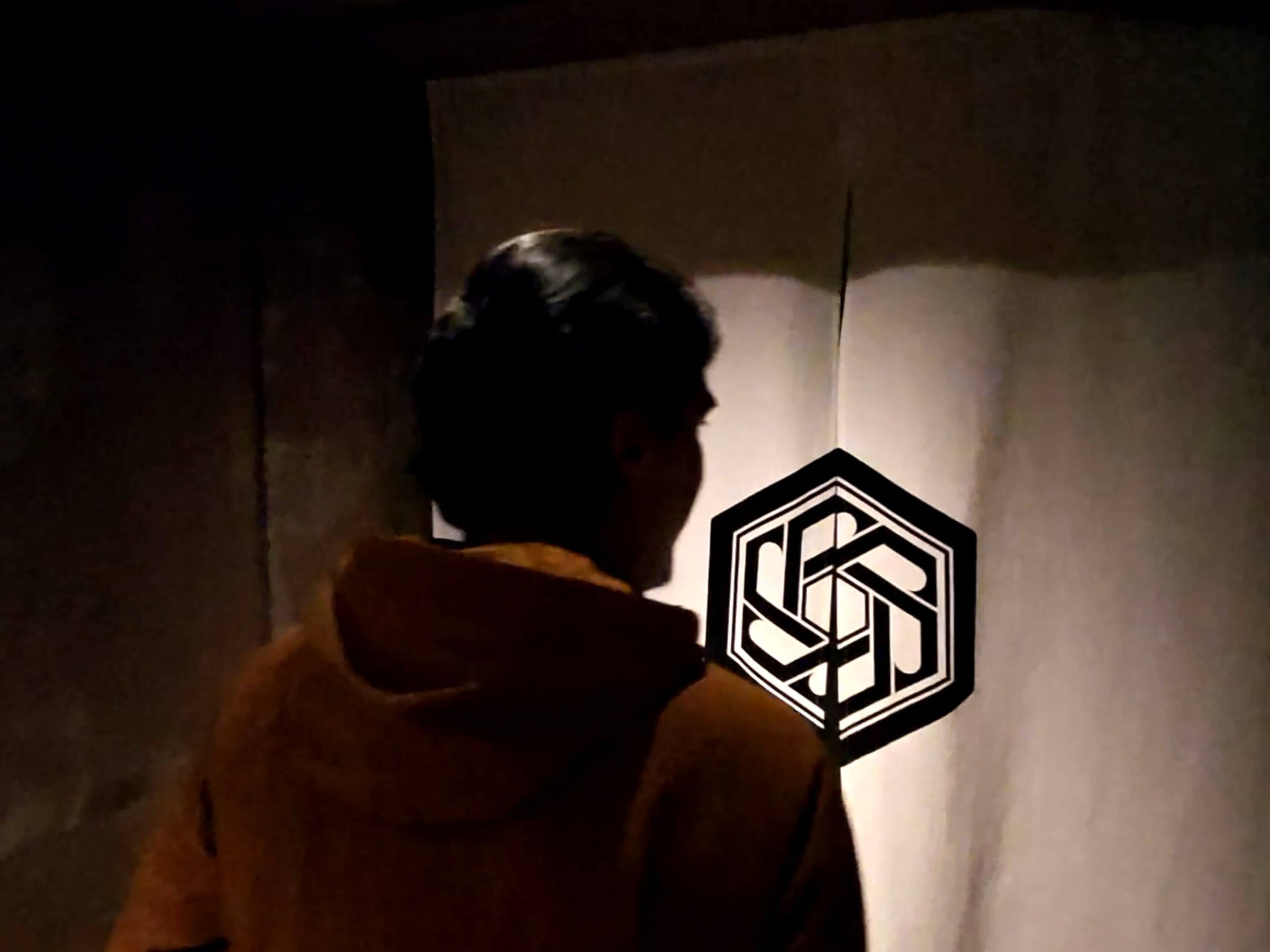
I remember saying, “I wish I had known all of this was here!”
The lounge and minibar generosity also stood out. Snacks, drinks, and alcohol in the lounge were included, and that changed the feeling of the stay. Not because you are trying to calculate what you can get out of it, but because you are not constantly being interrupted by small charges.
You can just enjoy. That ease is part of the luxury here.
Breakfast, Sengakuji, and a Bath
Our last morning in Japan became a sequence of small rituals.
Breakfast arrived around 7 AM, and it was movie worthy. We had experienced Japanese breakfast at basically every hotel on the trip, but this one felt extra in the best way. There was such variety: something fermented, something fresh, something cooked, something delicate, soup, rice, tea, little plates, little cups, and that chest with drawers that made the meal feel almost interactive.
It was quiet. The curtains were open. We had the garden on one side and morning light on the other.
During breakfast, Israel was telling me about Sengakuji, a Buddhist temple associated with the Forty-Seven Ronin, the masterless samurai from Ako who avenged their lord in one of Japan’s most enduring historical stories. It was close enough to walk to, so we planned on paying a visit.
But first, I needed to experience that bath.
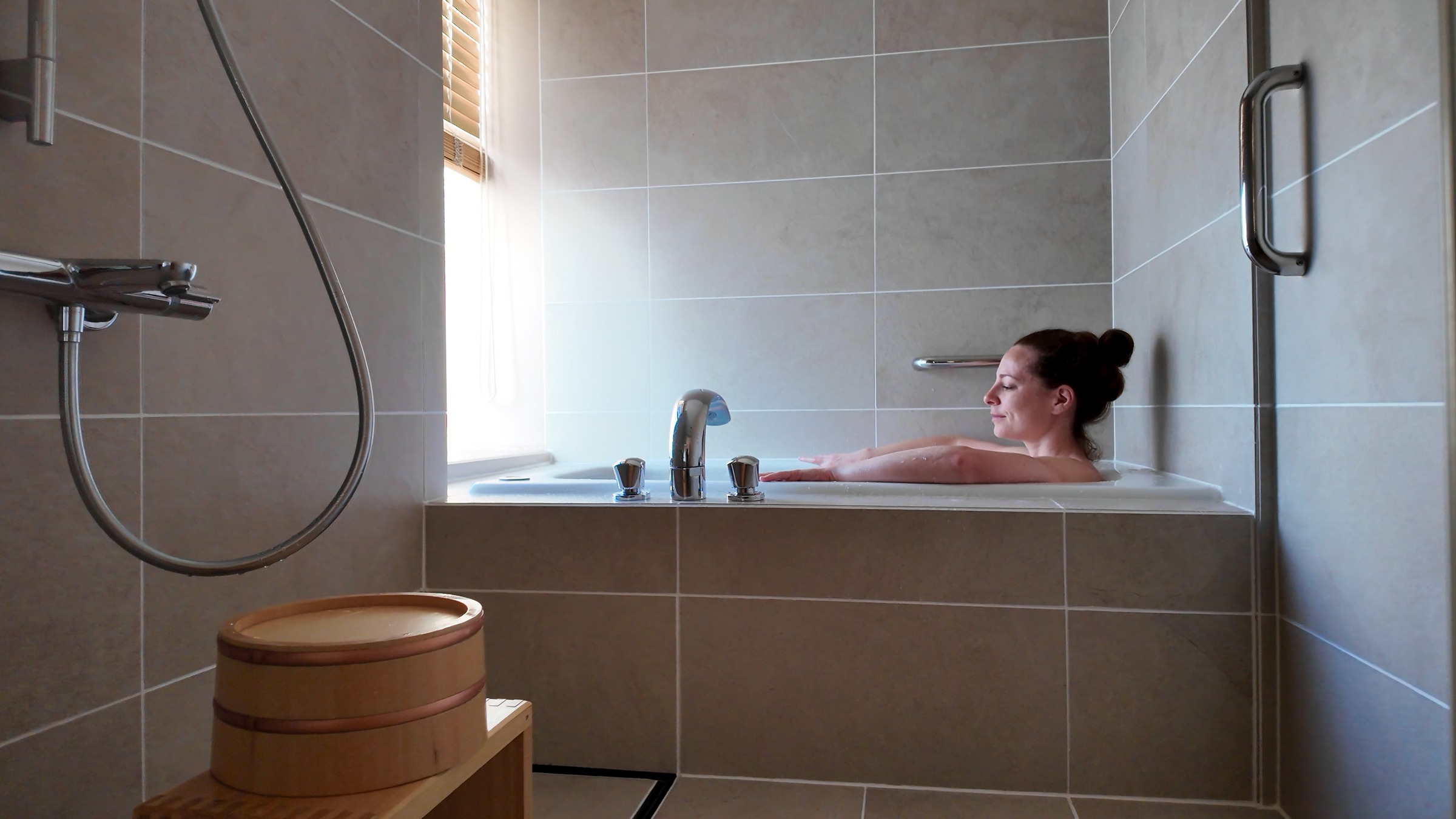
Japanese bath culture is definitely a practice I’m taking home with me.
Arriving at Sengakuji was not a big sightseeing production. It was quiet and reflective. Visitors still pay respects there with incense, so we bought incense and laid it at the graves.
This experience brought tears to my eyes. I remember thinking about loyalty, resolve, and how young some of them were. How people could lay down their lives to honor someone they believed in.
And then, because Japan loves to casually destroy me with beauty, I saw one of the most perfect flowers I have ever seen.
Obviously, I had to photograph it.
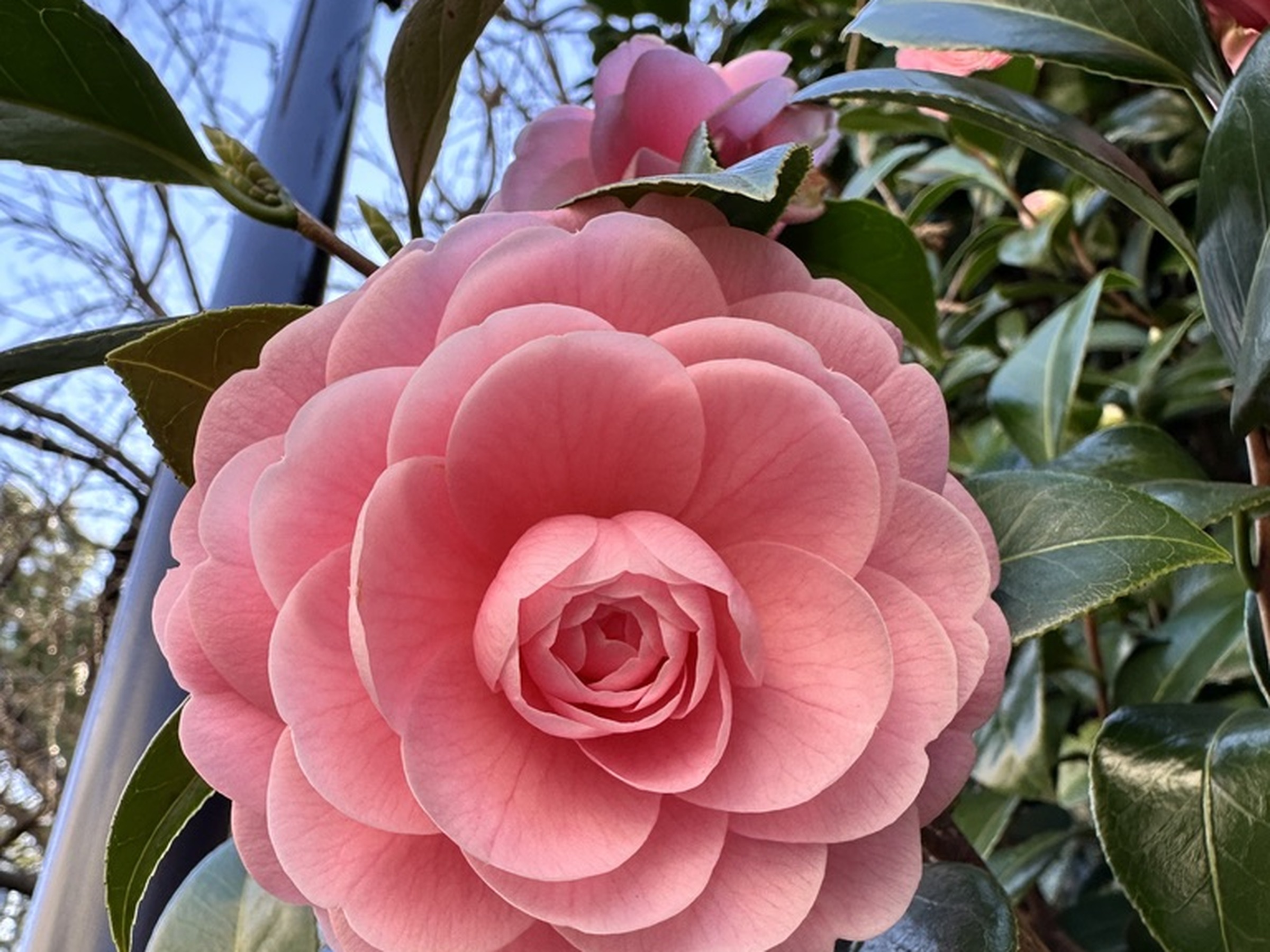
Then we walked back to the hotel, and because we had late checkout, the morning still had a little room left in it. I packed slowly, got some work done, and when it was time to go, we grabbed our things and sat in the lounge for some sake and wagashi.
The Hinoki Gift
Knowing we had a flight to catch, we walked slowly over to the front desk to check out.
I was trying to be normal about leaving, and then the team presented us with the most thoughtful gift: a little wooden hinoki diffuser cube with hinoki essential oil.
This may sound like a small thing, but for me it was not.
Hinoki had followed me through Japan in this quiet way. I noticed it in the baths, in hotel rooms, and in those little moments where the whole atmosphere suddenly felt cleaner, warmer, calmer. Before this trip, I do not think I fully understood why that scent felt so grounding, but by the end, I did.
And now, on our last morning, Takanawa Hanakohro gave it back to me in a form I could take home. I told them how much it meant, probably more emotionally than they were expecting from someone receiving a tiny wooden cube.
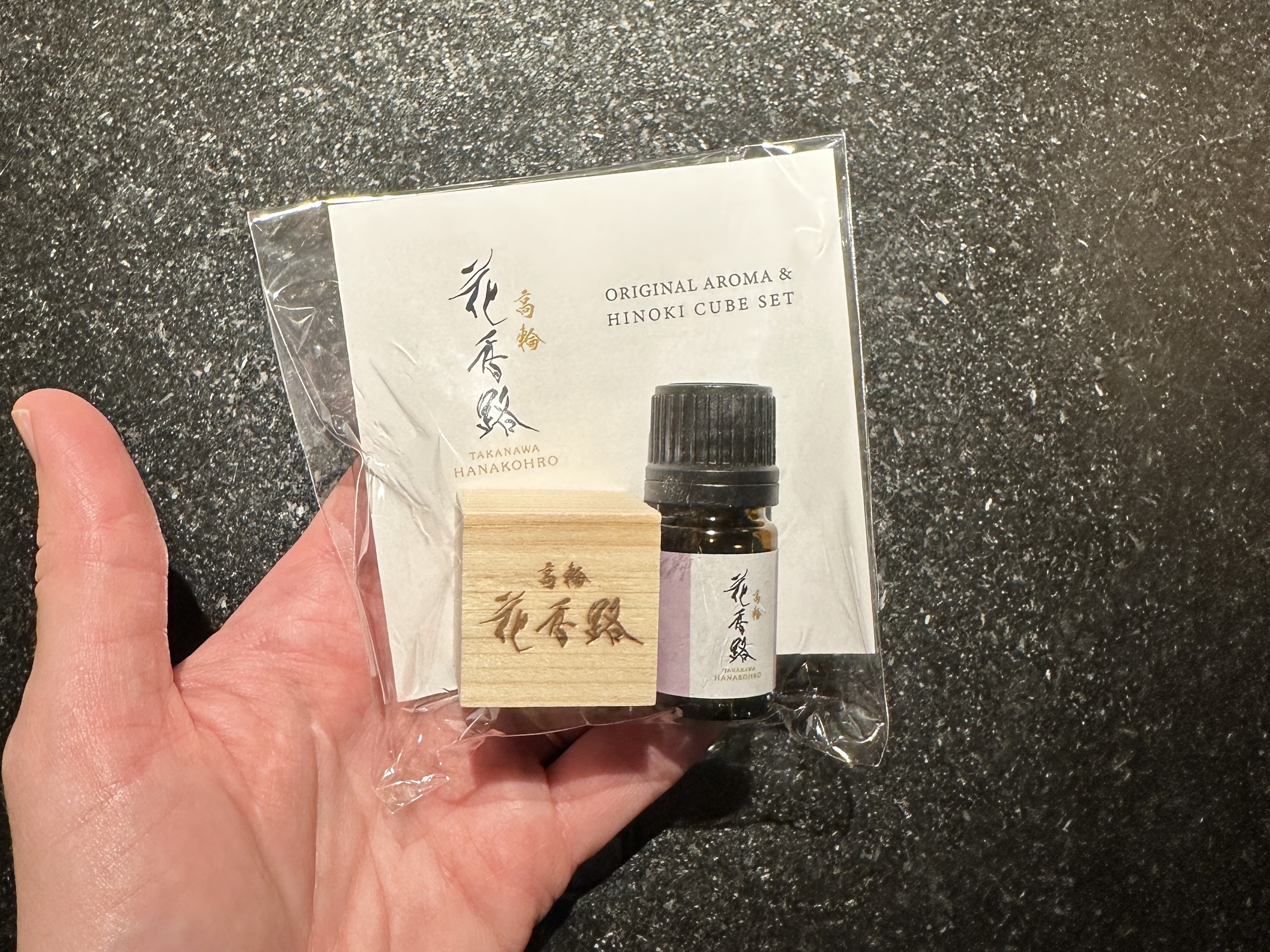
But that is the thing about the best hotel details. They do not always need to be grand. Sometimes they just need to be specific. Takanawa Hanakohro was not the loudest hotel of the trip. It did not need to be.
It was the place where Tokyo went quiet enough for me to savor the last bit of Japan before leaving it.
Krystal’s Rating & Accolades
Accommodations
★★★★★All-suite, tatami-floored, spacious, and deeply comfortable. Modern ryokan feeling without sacrificing sleep.
Dining
★★★★★In-room Japanese breakfast was the highlight, with room service and wider dining options adding range.
Service
★★★★★Soft-spoken, warm, polished, and attentive without intrusion. Chiyo and the team made the stay feel personal.
Sense of Place
★★★★★A 20,000-square-meter garden near Shinagawa with koi, bridges, lantern light, and real quiet.
Location
★★★★★Extremely useful for Shinagawa, Shinkansen, JR lines, and Haneda while still feeling residential and local.
Value
★★★★★A high price point, but the suite-only model, included lounge access, minibar generosity, and garden setting make the spend feel substantial rather than thin.
A quietly exceptional Tokyo stay for travelers who want ryokan texture, garden calm, and practical access without ending the trip in a generic city hotel.
Accolades
- Forbes Travel Guide Five-Star; Small Luxury Hotels of the World
How I Would Book Takanawa Hanakohro
I would book Takanawa Hanakohro for travelers who want a more local, residential-feeling Tokyo stay with real Japanese texture and strong logistics.
It is especially good for:
couples
adults
first-timers who want Japanese culture with modern comfort
repeat Tokyo travelers who are ready for something quieter than Ginza or Shinjuku
travelers using Shinagawa Station, the Shinkansen, JR lines, or Haneda
people who love the idea of a ryokan but still want a proper bed, space, and hotel convenience
I would be more careful with travelers who want a big international luxury scene, dramatic skyline views, or a fully traditional countryside ryokan. This is not that.
It is a contemporary ryokan-style stay in Tokyo, and that is exactly why it works.
For us, I believe the room category was the Japanese Garden Suite. For our dates, it was listed at $2,729.80 for one night. I would verify the exact category and current rate before booking because suite names can vary across systems, and this property deserves careful matching.
For a final-night stay, one night can work beautifully.
But if you want to actually enjoy the garden, lounges, sake tasting, matcha grinding, restaurants, bath, and slower rhythm, I would stay two nights.
One night lets you understand it.
Two lets you enjoy it.
Who It’s For
Travelers who want Tokyo to feel quieter and more local.
Couples and adults who appreciate intimacy, ritual, and calm.
Japan first-timers who want cultural texture without giving up comfort.
Repeat Tokyo travelers ready for something beyond the obvious luxury neighborhoods.
Travelers using Shinagawa, the Shinkansen, JR lines, or Haneda.
People who love gardens, lounges, seasonal details, and practical luxury.
Who It’s Not For
Travelers who want a remote countryside ryokan.
Guests who want the most dramatic Tokyo skyline hotel.
People who need a big, international, scene-y luxury lobby.
Travelers who will not use the garden, lounges, or broader hotel ecosystem.
Anyone who only needs a bed before the airport. This would be wasted on that mindset.
When to Go
Spring is the obvious beauty moment because the garden has more than 200 cherry trees. We were there in mid-March, before full bloom, and you could already see the buds beginning. I can only imagine what the garden looks like when it explodes with cherry blossoms.
Autumn would also make sense for foliage, especially if you want Tokyo with a softer, garden-focused rhythm.
For a final-night stay, timing matters less than intention. Use Takanawa Hanakohro when you want the end of the trip to feel calm, cared for, and still connected to Japan.
What You Need to Know
Address: 3-13-1 Takanawa, Minato-ku, Tokyo, 108-8612 Japan.
Takanawa Hanakohro is an all-suite, 16-suite hotel.
It is set within the wider Prince Takanawa hotel complex.
Official access is about 5 minutes uphill on foot from Shinagawa Station’s Takanawa Exit.
If you have luggage, consider a taxi, especially if you do not want your arrival to become a heroic stair climb.
Shinagawa Station is useful for JR lines, Shinkansen, and Keikyu Line access to Haneda.
Haneda to Shinagawa can be as little as 11 to 14 minutes by Keikyu Line, depending on terminal and train service.
Takanawa Hanakohro guests have access to OH-SAI Lounge and lounge hopping across the Takanawa Prince hotel area.
OH-SAI Lounge is exclusive to Hanakohro guests.
The garden is roughly 20,000 square meters with more than 200 cherry trees, koi pond, Sakura bridge, and historic structures.
Nearby Sengakuji Temple is associated with the Forty-Seven Ronin and is walkable from the hotel area.
TAYUTA Spa and bath policies should be verified directly before booking spa time because official pages have shown conflicting information.
The hinoki diffuser cube and oil were a firsthand checkout gift during our stay, not something I would present as a guaranteed standard amenity without confirmation.
Resources
Official hotel website: https://www.princehotels.com/hanakohro/
Guest rooms: https://www.princehotels.com/hanakohro/guest-rooms/
Japanese Garden: https://www.princehotels.com/hanakohro/experience/japanese-garden/
Lounge Hopping: https://www.princehotels.com/hanakohro/experience/free-access-to-other-lounges/
OH-SAI Lounge: https://www.princehotels.com/hanakohro/facilities/oh-sai-lounge-2/
Sengakuji Temple overview: https://www.japan-guide.com/e/e3000.html
Forbes Travel Guide: https://www.forbestravelguide.com/hotels/tokyo-japan/takanawa-hanakohro
Small Luxury Hotels of the World: https://slh.com/hotels/takanawa-hanakohro