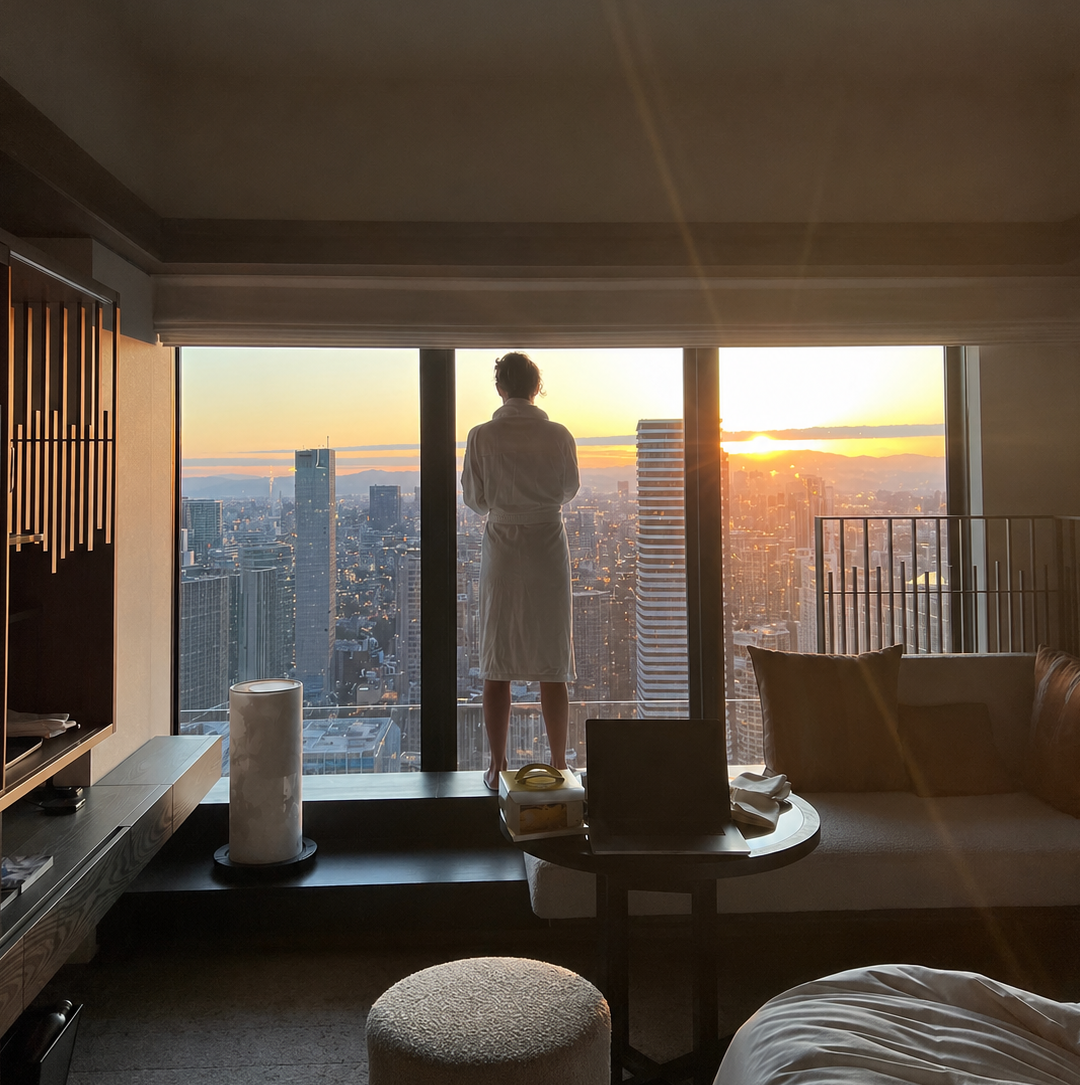
Watching the sunrise from our Deluxe Room
Osaka · Japan
Four Seasons Osaka: May Evoke a Strong Desire to Relocate
I'm not a city person but I felt right at home.
This and daily morning spa dates
March through June
Best months to visit
June through December
Best time to book
March through June
Best months to visit
June through December
Best time to book
Bright, modern hotel in historic Dojima, where Osaka’s merchant spirit still feels alive with warm service and a spa that shines. For those who seek Japan with energy, appetite, and the unnerving thought that maybe you could live here.
It was our last morning in Osaka, and my husband said something I did not see coming.
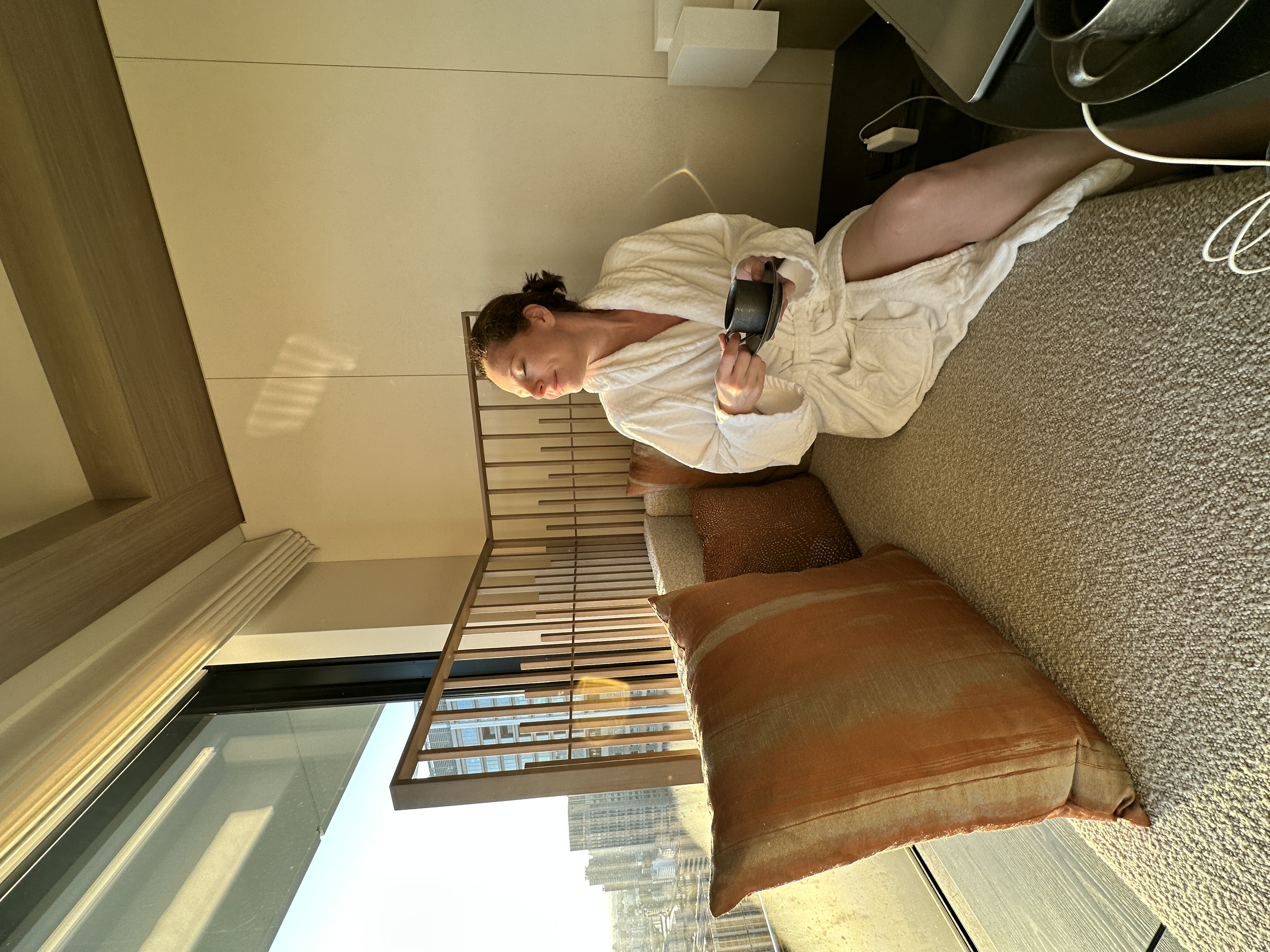
I woke up early to watch the sunrise and head to the spa. I had set my alarm the night before because I didn’t want to miss that moment, and because those blackout curtains work dangerously well. The room goes fully dark, even with the bright midday sun outside.
As the curtains lifted, soft morning light poured in. The city glistened with the mountains in the distance, and I could see Osaka Castle in the middle.
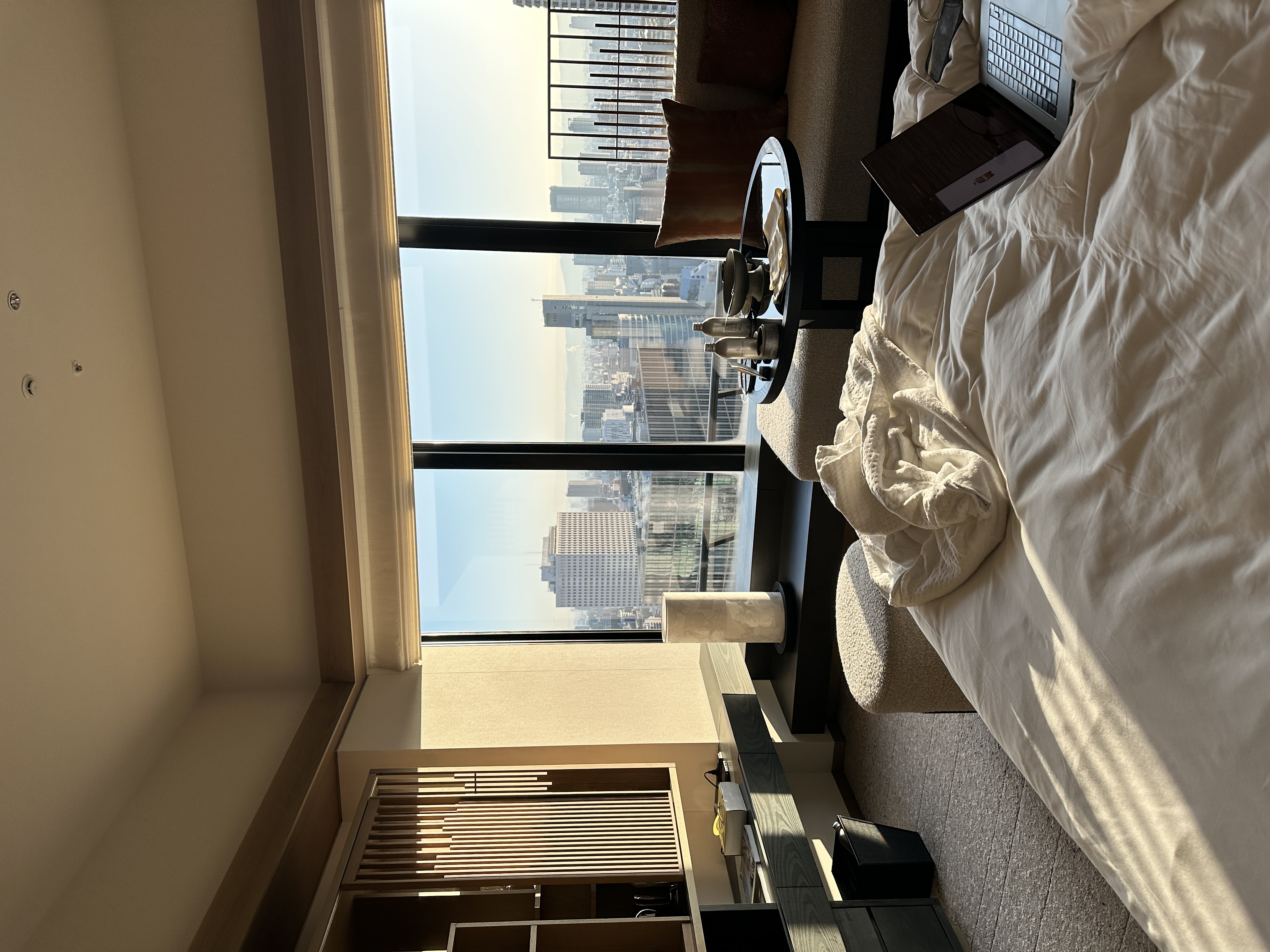
I sipped my coffee slowly, watching the view from our window. Israel was working from bed, the room was quiet, and thirty-four floors below us, Osaka was already in motion.
I said, "There's a palpable energy here that's so motivating. Makes me feel like you've got somewhere to be and something to do. I'm inspired to make the most of the day."
He looked pensive. Then he said it with quiet resolve, like this trip had finally answered a question we'd been carrying for over ten years:
"I want to move to Osaka."
I looked at him wide-eyed and intrigued.
"For real? Are you serious?"
His words caught me by surprise. Historically, I'm the impulsive one. I've been known to visit a city and as soon as we're back home, I'm building a plan to move. Israel is more selective. Measured. So when he said it, I knew he meant it.
And the strange part was, I felt the same.
I say strange because I expected to feel this way about Kyoto. I'm not a city person. Osaka seemed too big, too busy. Fun to visit, perhaps, but not somewhere I would want to live.
So what changed? And what did Four Seasons Osaka have to do with it?
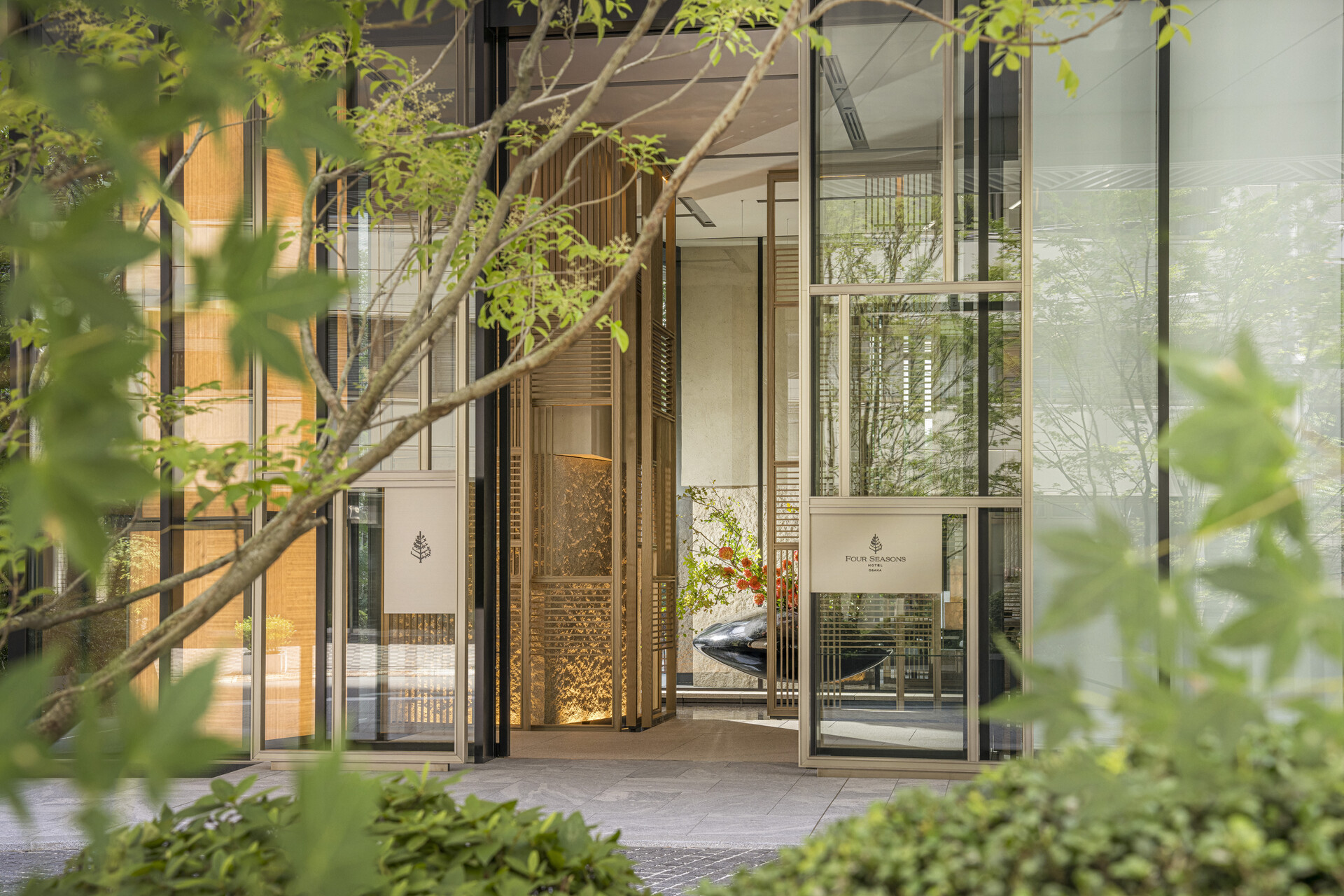
Arriving at Four Seasons Osaka was like a breath of fresh air. We had just come in from Tokyo and Kyoto, where so much of the beauty was quiet, precise, and sacred. Osaka felt immediately different. It was lighter. Bigger smiles, expressive, and expansive.
The front desk team presented us with a matcha energy shot during check-in. This confused me at first but in hindsight, it made a lot of sense. I saved it for the next day because caffeine and I do not play after 12pm. I know, I'm a boring wellness person.
The Property Tour
After check-in, we went upstairs to our Deluxe Room, but only long enough to drop our bags. I was immediately taken by the view! I never thought a concrete jungle could look so beautiful.
We headed back downstairs to meet with Chan for a tour of the hotel. Within minutes of hearing to her talk about Osaka, we realized our plan to stay only one night was a huge mistake.

The building rises inside the One Dojima Project, a 49-story, 195-meter tower in Dojima.[1] The hotel occupies the upper floors, with rooms, dining, and spa spaces on floors 28 through 37.[1] The tower itself is shaped as a nod to Osaka's identity as the City of Water, with a billowing-sail silhouette that references the city's merchant and maritime past.[2]
Our first stop was GENSUI, the hotel's modern ryokan on the 28th floor.[6]
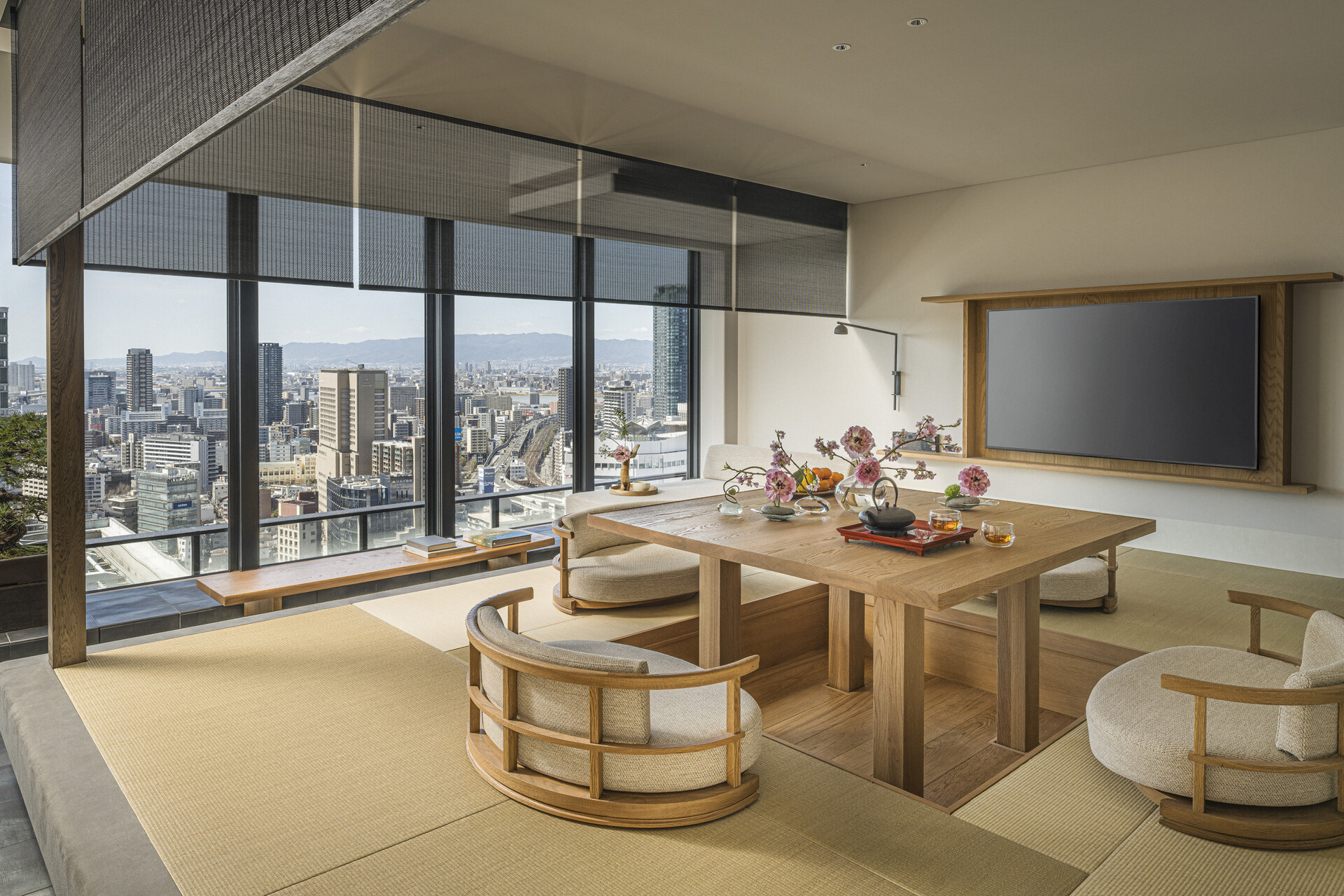
GENSUI means Gen, the mystery hidden in deep black, and Sui, the flow of water.[6] It has 21 rooms and suites that reimagine a traditional Japanese inn inside a skyscraper.[6] There are futon-style beds on raised platforms, tatami floors, dedicated check-in with tea service, and access to the SABO Lounge for bento-style breakfast, cultural activities, and evening nightcaps.
Although, we did not get to personally tour it because it was occupied, The Grand Tatami Suite, is my favorite. However, after touring the The Grand Osaka Suite I was torn. Only solution there is to split your time between the two.

On our way to the Presidential Suite, Chan told us that this was her favorite of all the suites.
I was curious but I'll admit, I'm not usually impressed by presidential suites so I was skeptical. Most of them fall short of their title and I find myself regularly disappointed. But this one proved me so wrong!
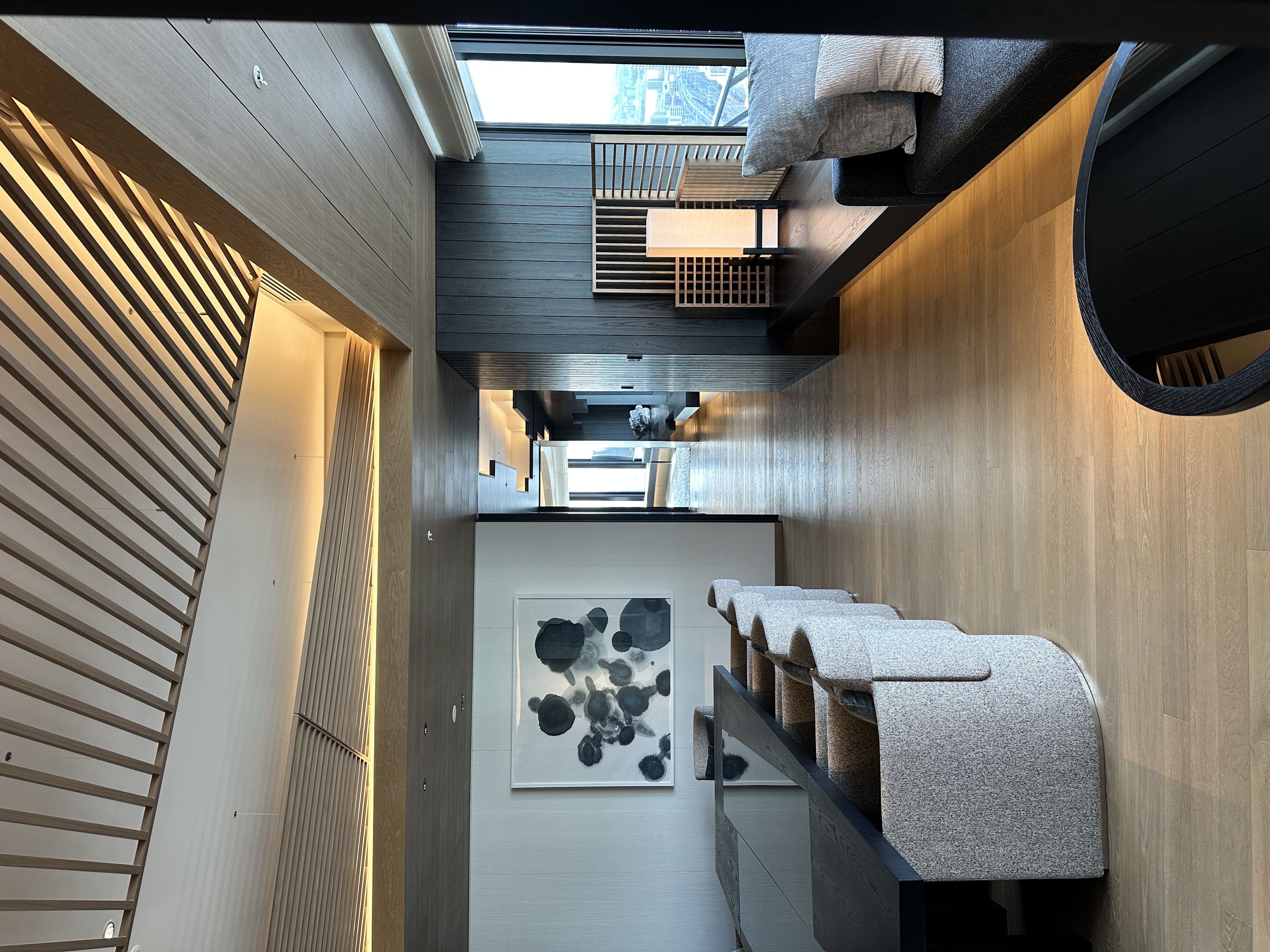
Massive swagger all around. So much space. Insane views. Sunrises to the right, sunsets to the left. The bedroom alone could be it's own suite. There's a dedicated office room, a dining room that doubles as meeting space, a full bar, living room, and THE CLOSET! Miranda Priestly would be very pleased. It has it's own zip code.
Perfect for a discerning couples, business execs, and families. It can connect to a Deluxe Twin adding two additional beds. Your very own penthouse in the sky.[5]
I prefer to space out my images but one wasn't going to cut it for this one. Even three back to back images do not cover the magnitude of this suite.


The Room
We arrived back to our room just in time to catch the sun setting. Even though our room was east-facing (sunrise) the sunset reflected through the surrounding buildings so we still got that evening glow too.
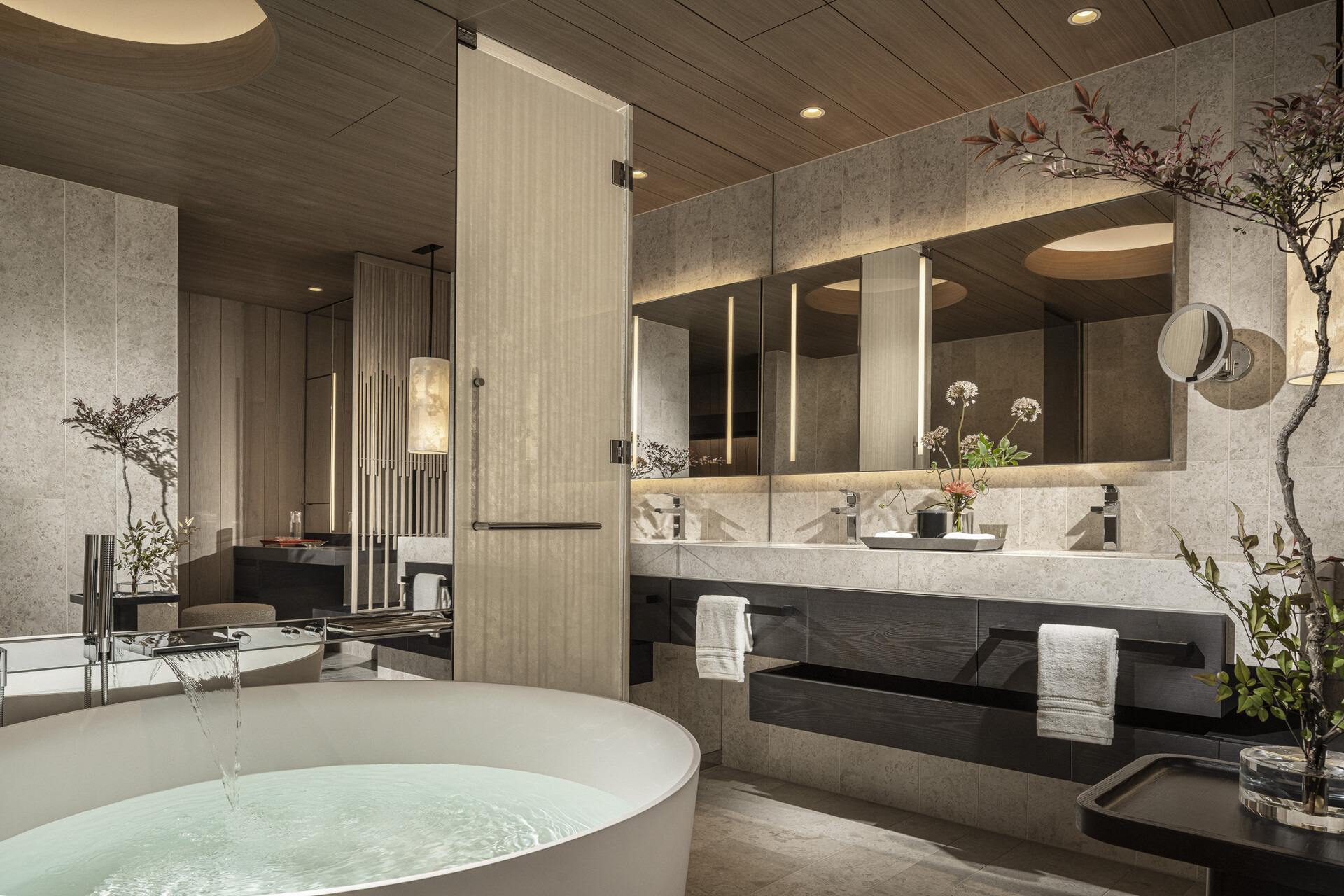
I was quite content with our cozy digs. What I love about this hotel is that you don't have to worry about making sure you choose the right room/suite with a tub. Every room/suite here has a bathtub.[4]
As much as we wanted to stay in and enjoy the space, we were starting to get hungry and I knew we had to make the most of our time in the city.

The Best Sushi We've Ever Had
Osaka’s Edo-period identity as “Kitchen of the Nation” came from everything that moved through the city: rice, seafood, produce, and regional goods. Kuidaore is the expression for eating yourself to ruin. That sounds less like a warning and more like a personality trait.
We were eager to wander the city for something local. I asked the concierge for recommendations and they put together a thoughtful list for us. This said a lot about them. Their only goal was to help us experience exactly we were looking for.
Along the way, we walked through Hankyu Higashidori, the local East Street. Dotonbori is full of tourists. Here, there were none.
Close by, we found a tiny sushi place and decided to go in. The menu was in Japanese and while we did our best, thankfully the chef & staff came to our rescue. Their kindness stayed with me and so did the sushi. It was some of the best we've ever had.

Afterward, we were cold and farther from the hotel than we realized. Israel figured out we could get back underground. That is how we found Dotica, the Dojima Underground Center, by accident. It runs beneath the streets with more than 50 shops and restaurants, connecting toward JR Osaka Station and Nishi-Umeda subway station.[7]
We had stumbled into a second city tucked underneath the first one and we were the only foreigners we could see.
Back in our room, we kept replaying the night. We were completely smitten with Osaka, and and a hot bath with the city glowing outside our window felt like the only proper ending.

The Spa
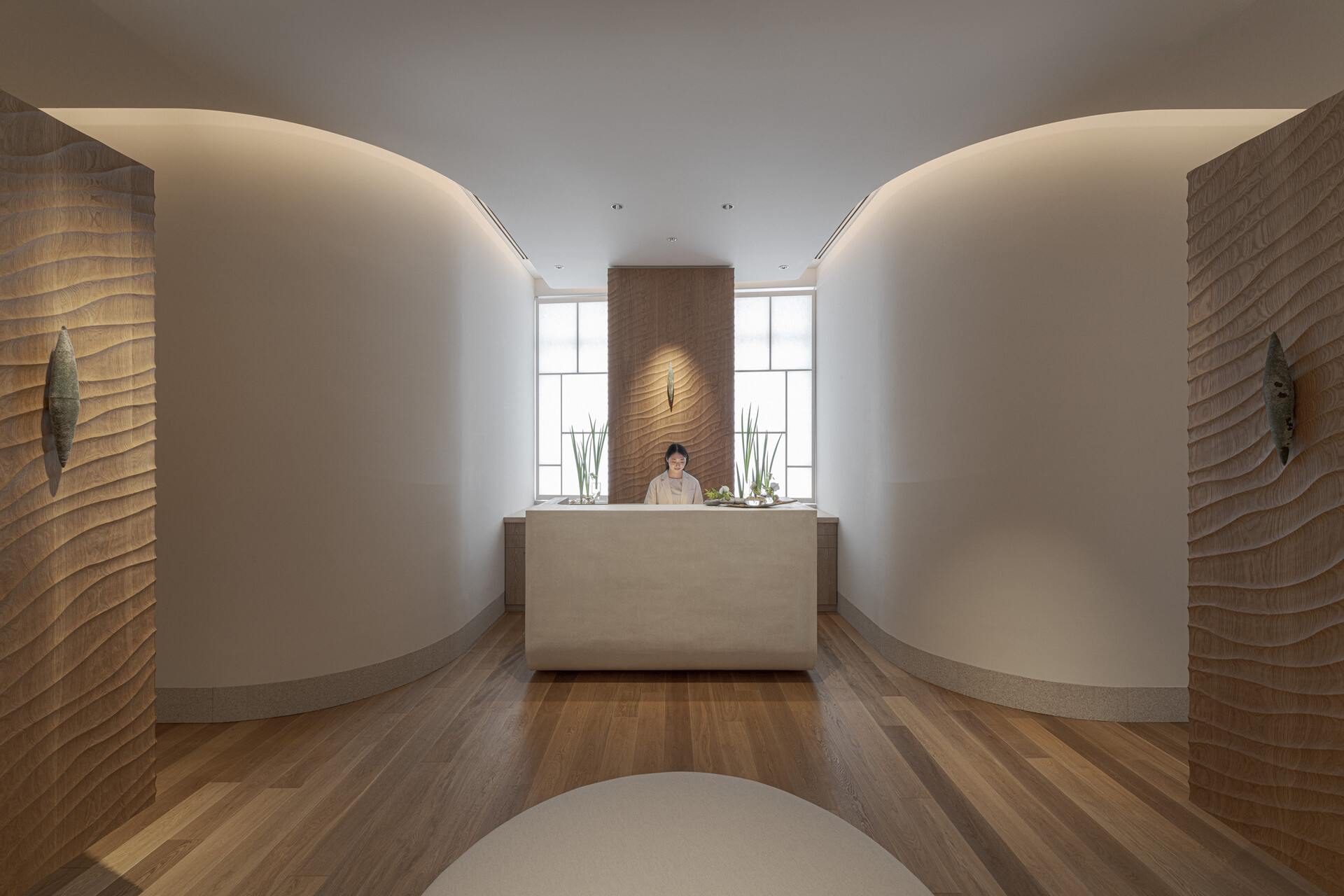
I knew the spa opened at 6:45 a.m., so the next morning, after my coffee, I got dressed and crossed my fingers that I would be early enough to have it to myself.
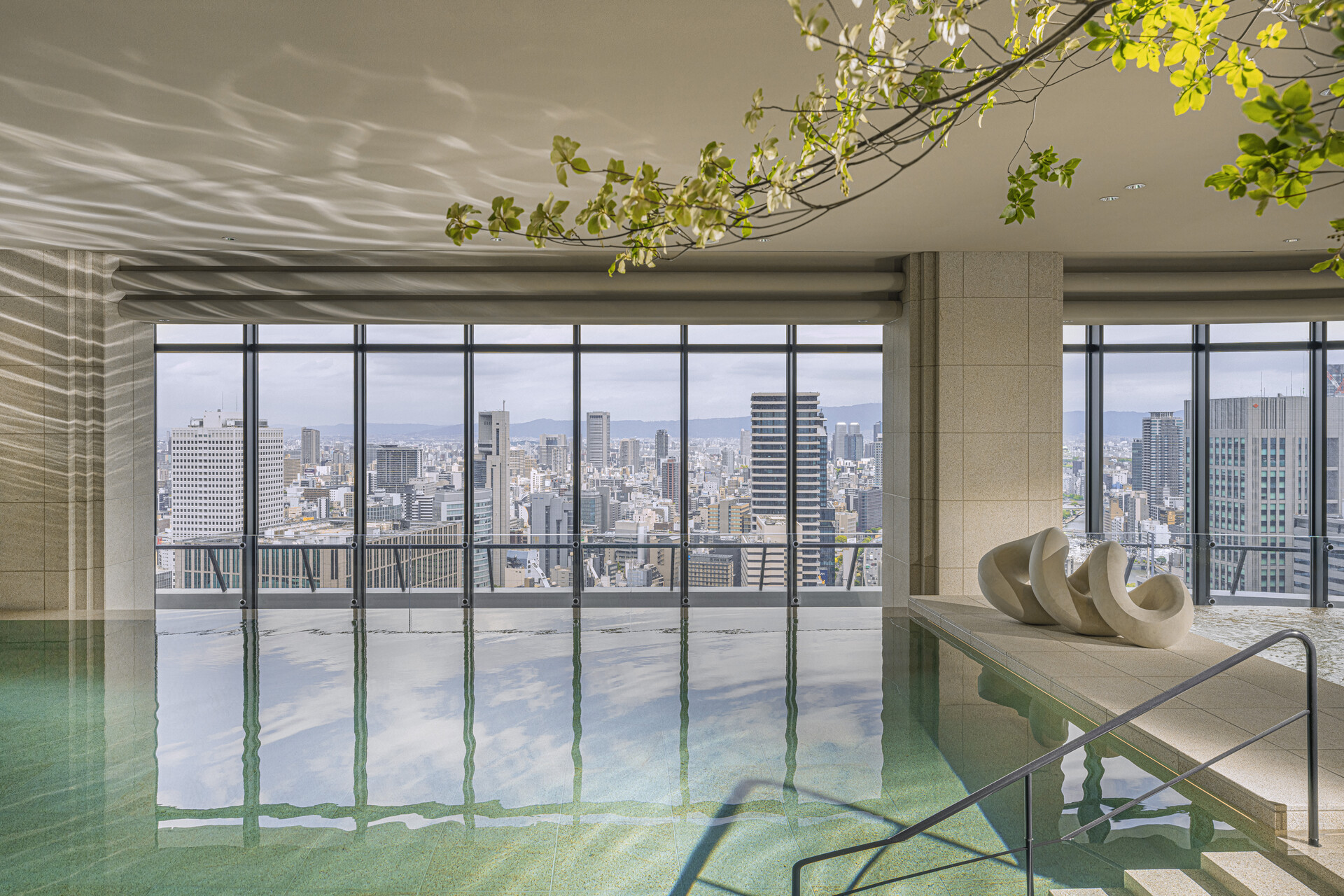
The space is absolutely gorgeous. Once you get to the changing, pool, and bath areas it is bright. Very bright. The 16-meter heated indoor pool sits high above the city with floor-to-ceiling windows, so even the wellness areas feel connected to Osaka rather than removed from it.[11]
The changing area has a sculptural circular room for privacy, and it is very cool. The ofuro, sauna, and steam areas have frosted floor to ceiling windows so the feeling is less "hidden sanctuary" and more elevated city retreat.[11]
I am curious to experience this spa at night. The brightness of the day must turn into the most beautiful city glow with an urban quality that feels cinematic.

Breakfast & The Hidden Door
After the spa, I got dressed and we went down for breakfast.
We did not have enough time to eat through the hotel properly, which pains me, but breakfast gave us a glimpse. There was a generous buffet with Japanese, Cantonese, Western, local flavor, comfort food, and pastries from Farine–the bakery on the first floor that connects the hotel to the city.[8]
You can also choose items from the menu, like the Osaka waffles, which I absolutely had, along with a little bit of everything.
The rest of the dining world sits mostly on the 37th floor: Jiang Nan Chun for Cantonese, Sushi L’Abysse for Edomae sushi with French influence, Jardin for all-day dining, breakfast, and afternoon tea, and Bar Bota for cocktails [8]

There is a secret door in the entrance foyer.[10] It opens into a smaller, hidden bar dedicated to domestic Japanese gins. I got to press the button. Sometimes luxury is a deeply meaningful cultural experience. Sometimes it is being allowed to open the secret door.
And that is what Four Seasons Osaka did, it opened doors. The hotel gave us these little access points into the city and brought it right up to us. By the end of our stay, we felt this yearning deep within our bones, hungry for more.
Which brings me back to what Israel said...
Time to check out
Back in the room, we had a few hours to chill before packing and moving onto our next destination. Israel was sitting on the bed with his laptop, devising a plan.
I understood why he wanted to move here. What surprised me was that I could suddenly imagine a life in a city I had already decided was not for me.

It started here, in this hotel, in this room. Four Seasons Osaka made movement feel good. It made ambition feel natural. It made the idea of waking up, working, eating, wandering, building, and doing it all again the next day feel not exhausting, but alive.
The hotel did not separate us from the city. It made the city easier to hold. Not as a place to pass through but as a base through which life could happen.
For me, there is no contest. Four Seasons Osaka is the best hotel in the city. I came thinking Osaka would be one night. I left knowing I would come back. And when I do, this is where I'm staying.
Accommodations
★★★★☆Presidential Suite was my favorite. Proper blackout curtains. Tubs in every room.
Dining
★★★★★Breakfast is abundant, Farine pastries. Hidden gin bar, exactly where you want to be for food.
Service
★★★★☆Warm, youthful, genuinely friendly. Very Osaka.
Spa & Wellness
★★★★☆Bright, modern, beautiful. I would go at night next time. No cold plunge.
Design
★★★★★Built around light, city views, and the feeling of a residence in the sky.
Location
★★★★★Dojima, Dotica, East Street, easy transit, and Kansai access. It works.
Value
★★★★★A smart way for travelers to enter the Four Seasons club in Japan.
Four Seasons Osaka made a city I expected to admire from a distance feel personal.
How to Book
When you book Four Seasons Kyoto through me as a Four Seasons Preferred Partner, you get benefits you can't access booking direct:
Daily breakfast for two, available at Jardin or through in-room dining
Priority upgrade, subject to availability at check-in
USD 100 hotel credit per stay, with higher credits for certain suite categories
Enhanced welcome amenity and VIP recognition
My firsthand room guidance on whether to choose a light-filled city room, a corner room, a suite, or GENSUI
Room choice matters here.
I loved our Deluxe Room, but suites are worth considering because this property is all about light and views. For families, look at the Presidential Suite plus connecting room. For a more traditional stay, look at GENSUI, especially the Grand Tatami Suite.
Osaka gives you access to Kyoto, Kobe, Nara, and the broader Kansai region. I would not treat it as just a stopover. It works for a first Japan trip, but I especially like it as a second-trip hub when you are ready to go farther south.
If Four Seasons Osaka feels like your kind of place, I'll book it for you with Preferred Partner benefits and the right room strategy.
Who It's For
This hotel is for:
Foodie travelers who want Osaka's energy without sacrificing comfort
Couples who like a city hotel that still feels restorative
First-time Four Seasons guests who want to understand the brand through a newer, more accessible Japan property
Families or multigenerational travelers who need smart connecting-room and suite options
Travelers using Osaka as a Kansai base for Kyoto, Kobe, Nara, and beyond
People who want modern Japanese design, light, views, warmth, and movement
This hotel is not for:
Someone looking for a dark, traditional ryokan feeling throughout the property
Travelers who want the hush of Kyoto garden hotels
Anyone who wants their city hotel to hide the city from them
If you want Kyoto stillness, choose Kyoto. If you want light, warmth, food, movement, and a city that might pull you in, choose Osaka.
When to Go
Best times:
Mid-to-late March and early April for cherry blossom season, with the usual Japan peak-season caveat: availability and rates get serious.
Late November for autumn foliage and cooler weather.
February to early March if you want a smarter value window and do not mind the cold.
June can be rainy, but rates are usually gentler than peak spring or fall.
For this hotel, also think about light.
Morning is beautiful in east-facing rooms. Evening is probably when the spa makes the most sense. If you care about views, room orientation matters: east-facing rooms can offer sunrise, Ikoma mountain range, and Osaka Castle views, while west-facing rooms look toward the Yodo River, Osaka Bay, and, on clear days, the Rokko mountains near Kobe.
How long to stay:
We only had one night, and that was not enough. If you have the time, three to five is the sweet spot. Especially if Osaka is part of a larger Kansai itinerary. There is too much to see, eat, and access to treat this as a sleep-and-leave stop.
Included with your stay
- Daily housekeeping
- Access to the fitness center
- Access to the pool and spa wet facilities where available
- In-room bathtub in every room category
- TOTO Neorest toilet in every room
- Blackout curtains and layered lighting controls
- Standard Four Seasons service and concierge support
- Included when booked through Four Seasons Preferred Partner:
- Daily breakfast for two
- Priority upgrade, subject to availability
- USD 100 hotel credit per stay, with higher credits for some suites
- Enhanced welcome amenity and VIP recognition
Not included
- Most dining and alcohol
- Spa treatments
- Private transfers
- Guaranteed upgrades
- GENSUI-specific inclusions if you are not booked on the GENSUI floor
What You Need to Know
Location: Dojima, Kita-ku, Osaka
10–13 minute walk to JR Osaka / Umeda Station
15 minutes by car to Shin-Osaka Station for the Shinkansen
About 10 minutes by car or 20 minutes by subway to Dotonbori
About 15 minutes by car to Osaka Castle
About 60 minutes by car to Kansai International Airport
Easy regional access: Kyoto in about 30 minutes by rapid train, Kobe in about 25 minutes, Nara in about 50 minutes[12]
The property:
Opened August 1, 2024
175 rooms and suites
Hotel spaces on floors 1–2 and 28–37 of the One Dojima Project
GENSUI modern ryokan floor with 21 rooms and suites
37th-floor dining with Jiang Nan Chun, Sushi L'Abysse, Bar Bota, and Jardin
Farine bakery on the first floor
Hidden gin bar inside Bar Bota
36th-floor spa and 16-meter indoor pool
Every room has a bathtub
No cold plunge in the spa
Direct access to Dotica, the Dojima Underground Center
My quick room guidance:
Deluxe Room: cozy, light-filled, and stronger than you might expect
Premier Room or Premier Corner Room: good if the bath-with-view experience matters
Grand Osaka Suite: beautiful tub, more space, strong residential feel
Presidential Suite plus connecting room: ideal for families or multigenerational travelers who want a true penthouse feeling
GENSUI Grand Tatami Suite: the one I would choose if you want the ryokan-in-the-sky concept
Resources
[1] Four Seasons Hotel Osaka Press Room — Hotel Facts — official property facts, opening date, room count, and building context
[2] Four Seasons Hotel Osaka — Seven Design Stories — official design notes on One Dojima, the City of Water inspiration, and GENSUI
[3] Four Seasons Hotel Osaka — Getting Here / Dojima context — Dojima context and arrival/location guidance
[4] Four Seasons Hotel Osaka — Rooms & Suites — room categories, suites, and bathtub details
[5] Four Seasons Hotel Osaka — Presidential Suite — Presidential Suite details and connecting-room context
[6] Four Seasons Hotel Osaka — GENSUI Modern Ryokan Floor — Four Seasons Osaka's modern ryokan floor
[7] Dojima Underground Center / Dotica official website — Dojima Underground Center details
[8] Four Seasons Hotel Osaka — Dining — restaurants, bars, afternoon tea, and bakery
[9] Four Seasons Hotel Osaka — In-Room Dining Breakfast Menu — in-room breakfast menu context
[10] Four Seasons Hotel Osaka — Bar Bota — Bar Bota and hidden gin bar context
[11] Four Seasons Hotel Osaka — Spa — pool, ofuro, sauna, steam room, and treatment details
[12] Four Seasons Hotel Osaka — Getting Here — regional access and arrival guidance